Self Storage
Annual Report 2026

The definitive guide
to the UK self storage
industry

The UK self storage industry continues to evolve as amainstream real estate asset class. In its nineteenth year of publication, the SSA UK Self Storage Annual Report - produced in partnership with Cushman & Wakefield - draws on operator survey responses, a YouGov public survey, and a customer survey of 232 respondents, a record response, to deliver one of the most comprehensive analyses of any self storage market in the world.

The 2026 report covers data from the 2025 operating year
and reveals a market navigating revenue headwinds, shifting customer demographics, and a meaningful improvement in public awareness - the first in a decade.

£1.3BN

Annual Industry Turnover

67.5M sq ft

Total Storage Space (MLA)

3,143

Stores Nationwide

Summary of
Key Findings

CLICK each box to LEARN more

£27.40

Revenue per
sq ft (ex-VAT)

2

74.5%

Occupancy
(all stores, CLA)

3

79.6%

Mature store
occupancy (CLA)

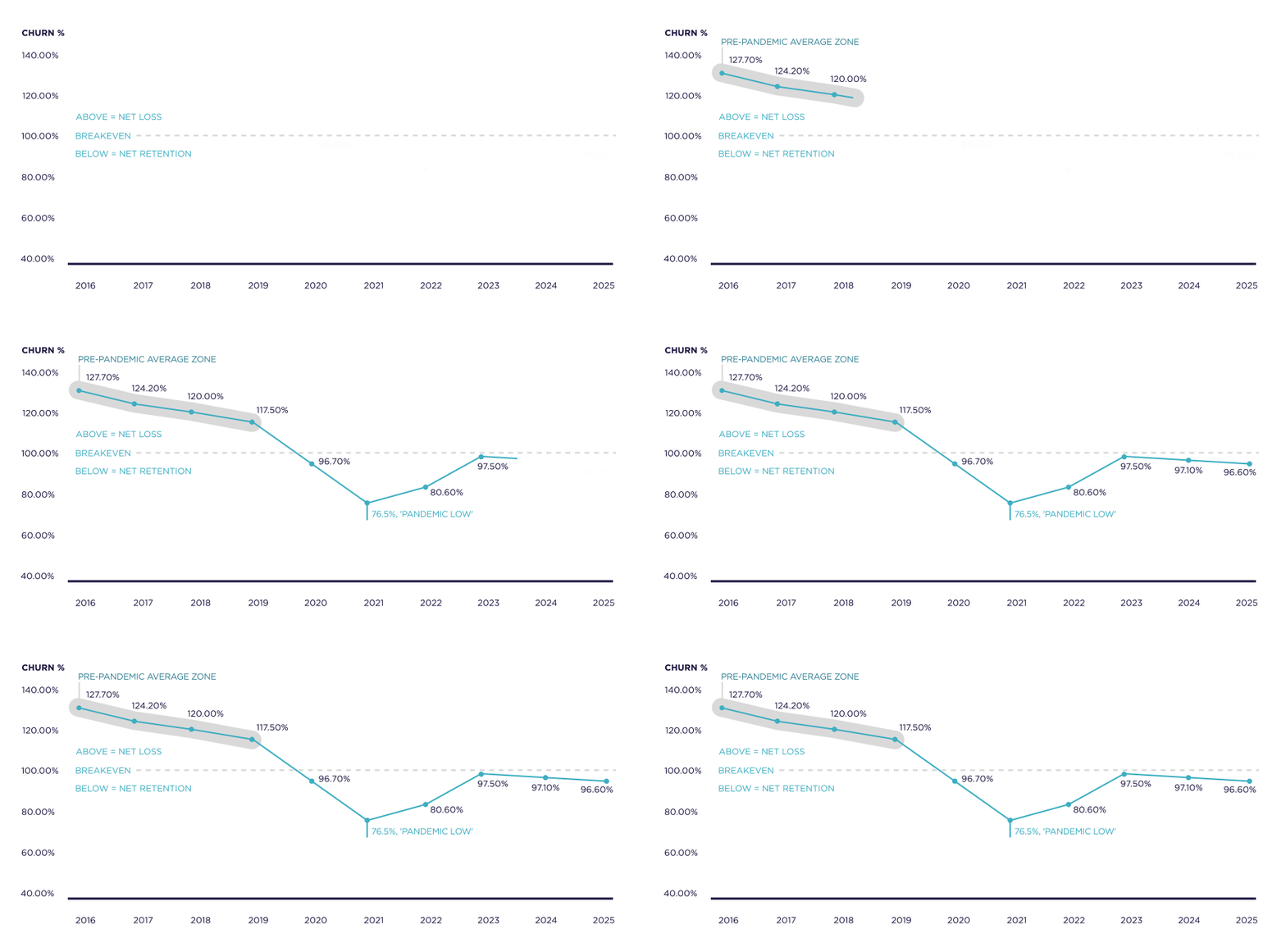
Churn has remained relatively consistent, reducing marginally

to 96.6% from 97.1%. This is

20 percentage points below

the pre-pandemic average.

4

96.6%

Churn rate

5

£1.3BN

Annual
turnover

6

2.6

Average staff

per store

Awareness is increasing. Good awareness rose from 48.1% to 52.6%, up 4.5 percentage points; with those able to name at least one store, up to 58.3%.

7

52.6%

Good awareness

8

31%

Users between

55 and 64

Operators actively using AI is
54% up from 25% last year,
with notable use cases including content creation, image generation and analysis.

9

54%

Operators
actively using AI

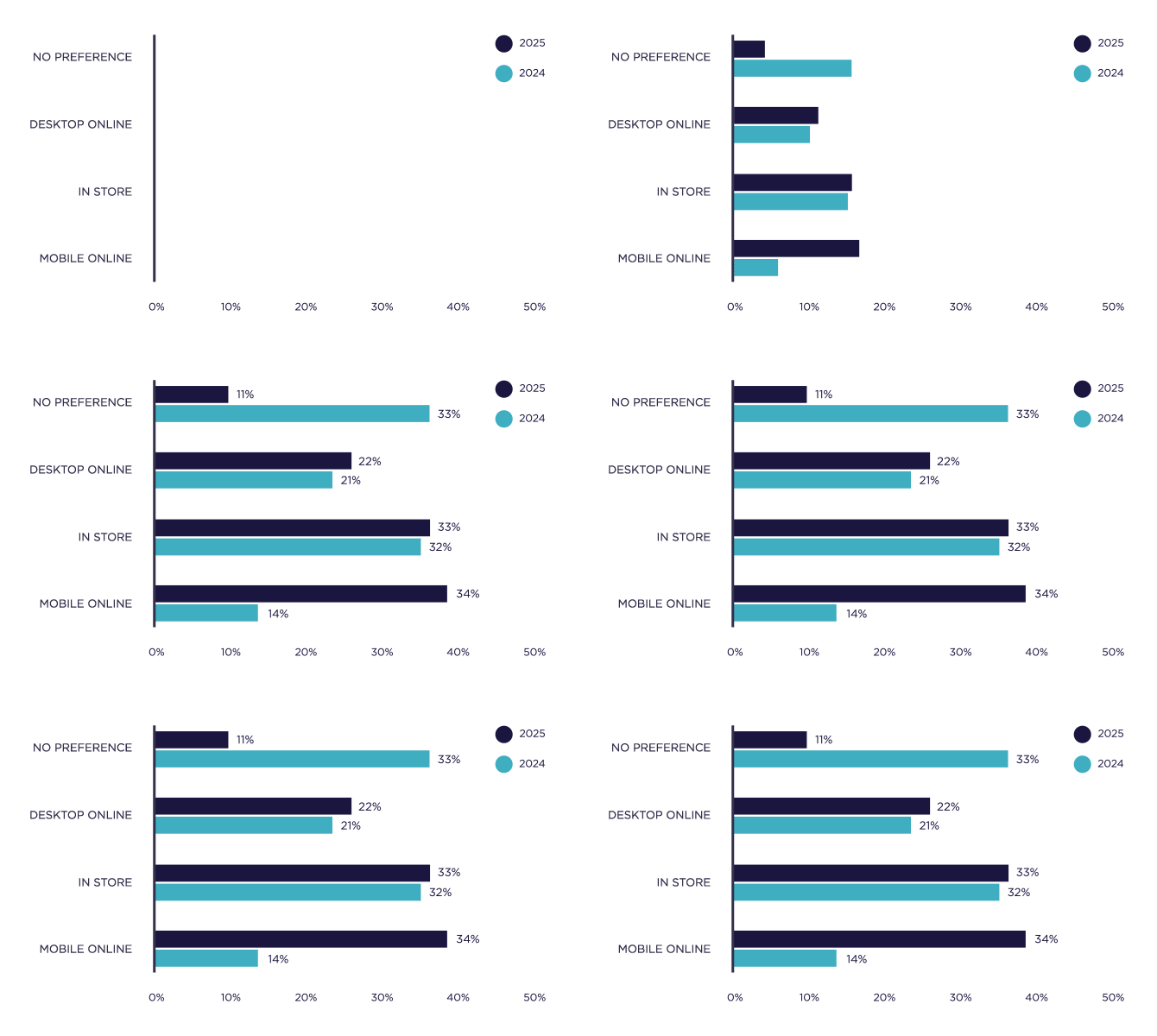
Booking preferences have

shifted strongly to mobile, increasing from 14% to 34%.

10

45.1%

Repeat
customers

The UK Self Storage Landscape

3,143

self storage

stores

62.4M sq ft

Total CLA

39,507 sq ft

Average

store CLA

1,895

Internal

stores (est.)

1,570

Individual

operators (est.)

67.5M sq ft

Total mla

42,815 sq ft

Average

store MLA

1,248

Container-based

stores (est.)

16.2%

Unmanned

stores

1,248

CONTAINER-BASED

STORES

1,895

INTERNAL

STORES

The UK self storage market comprises 3,143 stores with a combined current lettable area of 62.4 million square feet and a maximum lettable area of 67.5 million square feet. The industry generated turnover of almost £1.3 billion.

The structural split between internal (purpose-built or converted warehouse) facilities and container-based sites continues to evolve. Container stores represented 40% of all new openings, reflecting lower capital costs and faster deployment, particularly in rural and suburban locations where planning constraints on traditional builds remain challenging.

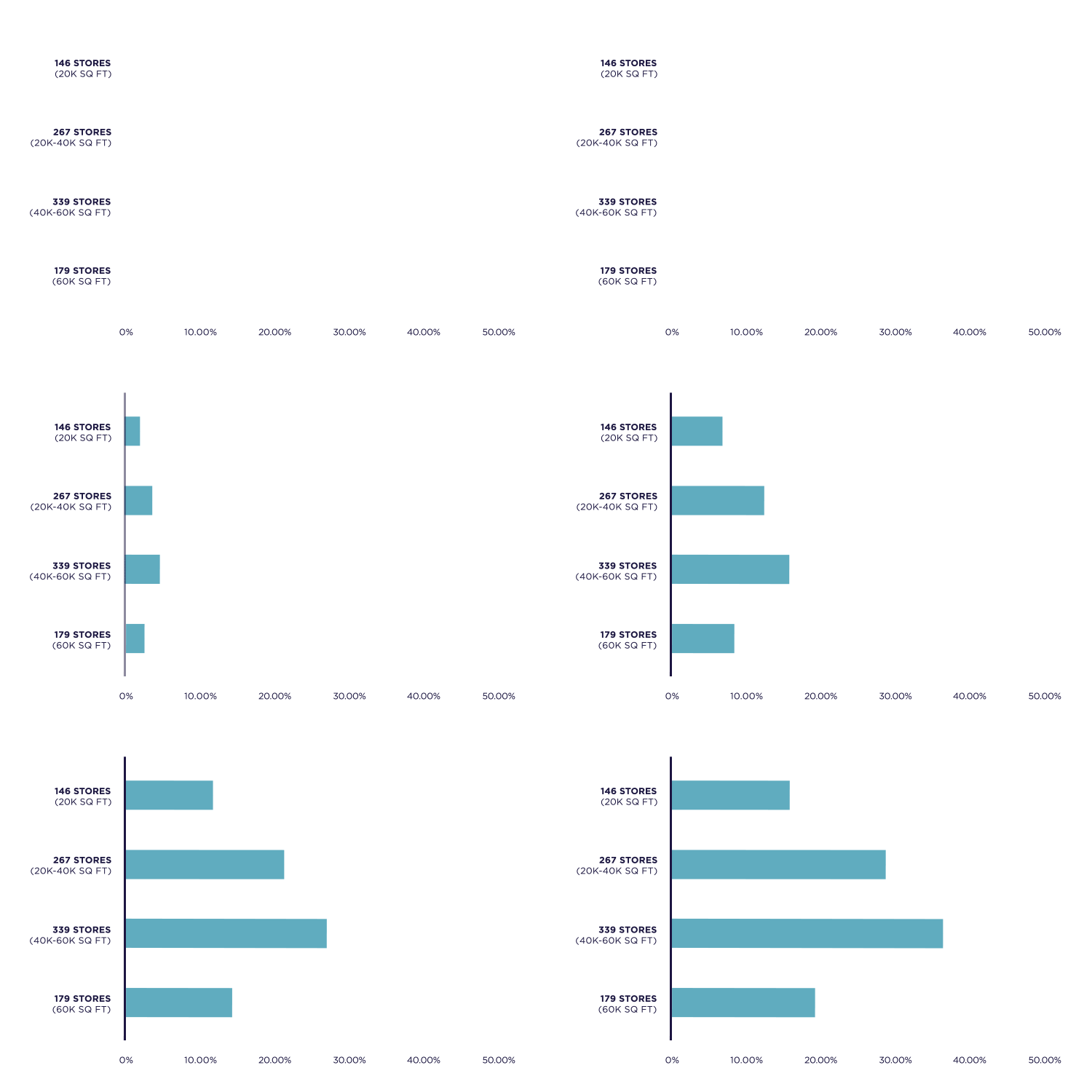
The size distribution shows a market dominated by mid-sized stores: 339 stores (36.4%) fall in the 40,000–60,000 sq ft bracket, 267 (28.7%) in the 20,000–40,000 range, 179 (19.2%) exceed 60,000 sq ft, and 146 (15.7%) are 20,000 sq ft or less.

Five Key Themes

1

Revenue

Under

Pressure

The UK self storage industry

faced revenue pressure in 2025,

with revenue per square foot

declining 5.1% to £27.40 (ex-VAT)

from £28.87 in the prior year.

2

The Container

Revolution

Continues

 The lower capital requirements and
faster deployment timelines remain
attractive, particularly for regional
operators and new market entrants
targeting suburban and rural locations.

3

Steady

with a

strong end

The sector continues to benefit
from structural demand drivers,
inflation linked income and
relative resilience.


4

The
Awareness

Breakthrough

After a decade of stagnation,

public awareness of self storage

improved meaningfully

‘good awareness’ rose

from 48.1% to 52.6%.

5

An Ageing

Customer

Base

The peak customer age
bracket has shifted from
45–49 to 55–64, with this
cohort now representing 31%

of all customers.

Technology & AI

Adoption Continues to Transform Operations

43%

of operators now use AI for content creation up from 13% in 2024

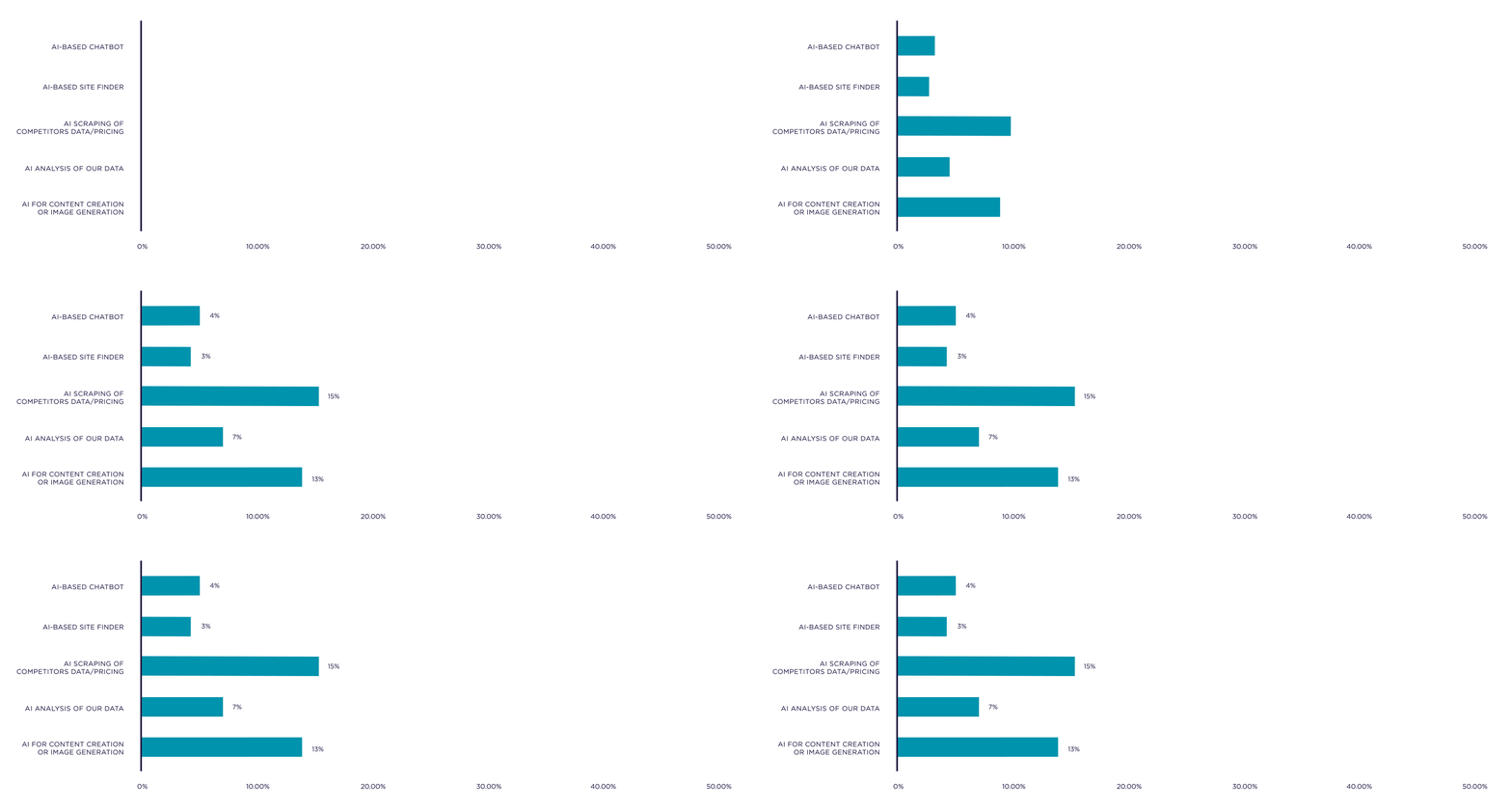
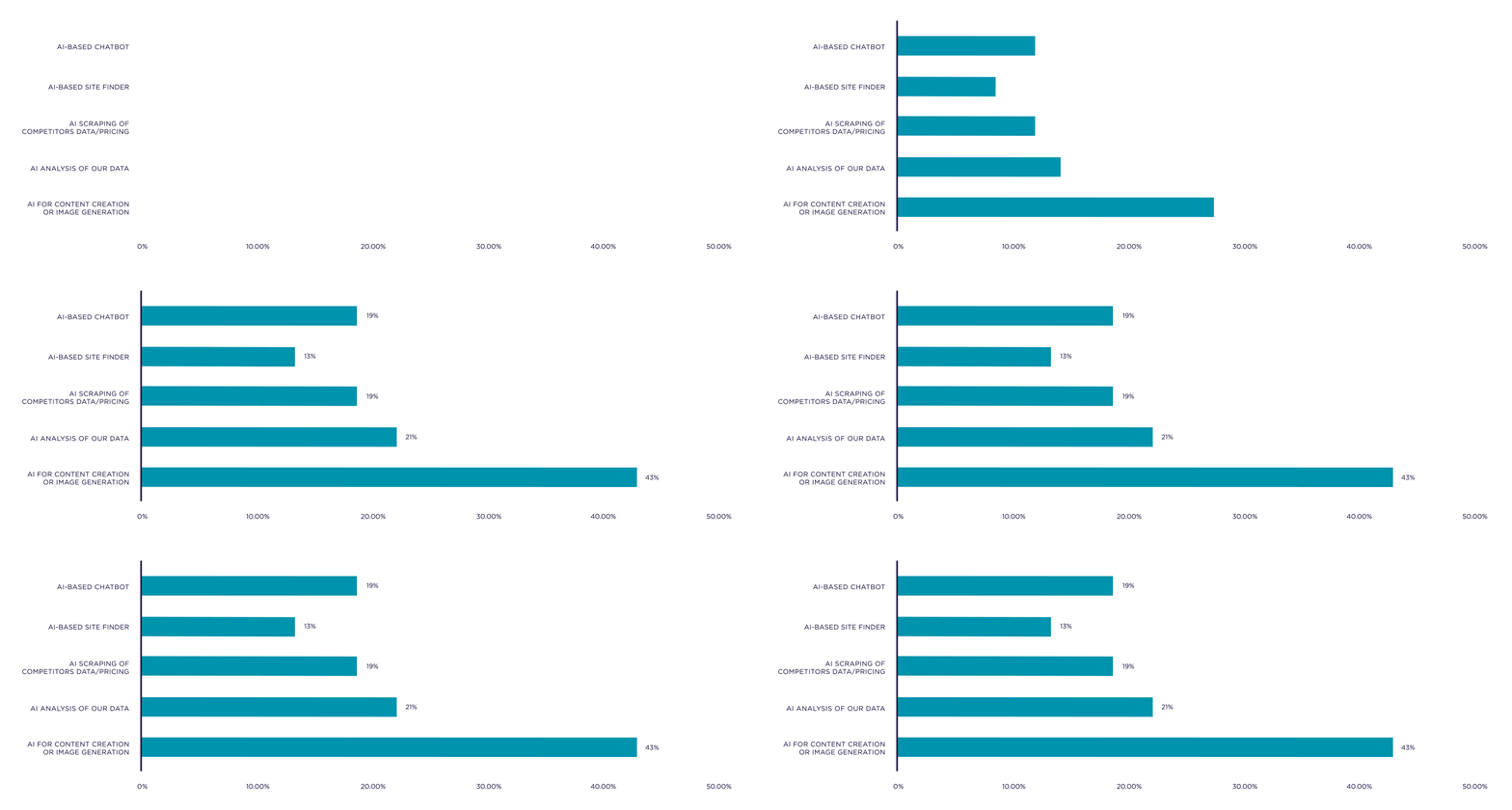
Technology and in particular AI adoption continues to reshape self storage operations. Using AI for content creation or image generation increased from 13% of respondents in 2024 to 43% of respondents in 2025. 21% are now using AI for analysis of their own data, compared to just 7% previously, while 19% are using AI for chatbots and scraping of competitor pricing. Those using AI to find sites has increased from 3% to 13%.

AI adoption usage

Housing Market Dynamics

Fuelling Storage Demand

27%

of domestic customers
cite a house move as their
primary reason for storing

65,481

mortgage

approvals

6%

+28.1%

transactions

YoY

+3.9%

HOUSE PRICES

0.5pp

-22%

landlord

instructions

+11%

SUPPLY

108,250

FEBRUARY

TRANSACTIONS

from 2.7

Housing Transactions & Mortgage Approvals

Housing market activity remains one of the

most direct demand drivers for self storage, with

approximately 27% of domestic customers citing

a house move as their primary reason for storing.

Mortgage approvals, an important gauge of housing

market demand, saw a slight dip at the end of 2025,

likely to have been impacted by Budget uncertainty.

In December there were 61,013 mortgages approved,

8.4% below the same time last year and 4.8% below

last month. However, they remained 4% above the

5-year average. Transactions remained relatively

steady as 2025 came to an end. In December there

were 100,440 residential transactions, an annual

increase of 4.7% and a modest monthly decrease

of -0.1%. They remain 6% above the 5-year average.

Since then, the outlook has changed. The Bank of England held rates at 3.75% unanimously on 19 March, as widely expected. Consensus suggests that inflation could increase to 4% and stood ready to act if needed. However, in an unusual intervention 100 minutes

after the announcement, Governor Bailey cautioned against “reaching strong conclusions about us raising

interest rates.” 

Mortgage approvals had already dipped at the end

of 2025, and this continued into 2026 with 59,999 mortgages approved in January, 9.6% below the

same time last year and 1.7% below last month.

Going forward we expect to see a continued decline

in mortgage approvals as mortgage rates remain

volatile and consumer sentiment weakens.

The Renters' Reform agenda will have a continued impact on the private rented sector.

Sustainability & ESG

From Compliance to Competitive Advantage

CLICK BUTTON
TO LEARN MORE

A Decade of Occupancy

Stabilisation After the Post-Pandemic Correction

74.5%

All-store occupancy

2025 (CLA)

79.1%

Mature store occupancy

2025 (CLA)

83.3%

Peak

(2021, all stores)

-0.7%

YoY change

(all-store CLA)

Occupancy Rate on Lettable Area 2013–2025

Regional Mature Occupancy

(cla, 2025)

UK self storage occupancy has followed a clear narrative arc over the past decade. From a base

of 73.9% in 2016, steady organic growth lifted rates

to 77.2% by 2018. The pandemic then created an unprecedented surge, with occupancy peaking at

83.3% in 2021.

The post-pandemic normalisation saw occupancy soften to 80.0% in 2022, 75.9% in 2023, and 75.1% in 2024. In 2025, all-store occupancy on a current lettable area (CLA) basis settled at 74.5%, continuing the post-pandemic normalisation. The data suggests the market is approaching a new equilibrium level in the mid-70s, in line with pre-pandemic norms.

Mature stores (those not opened or expanded in the last four years) improved to 79.6% (CLA), up from 79.0% in 2024. This is a positive signal: established stores are holding occupancy well, and the gap between all-store and mature-store metrics continues to reflect the dilution effect of new supply entering at lower initial fill rates.

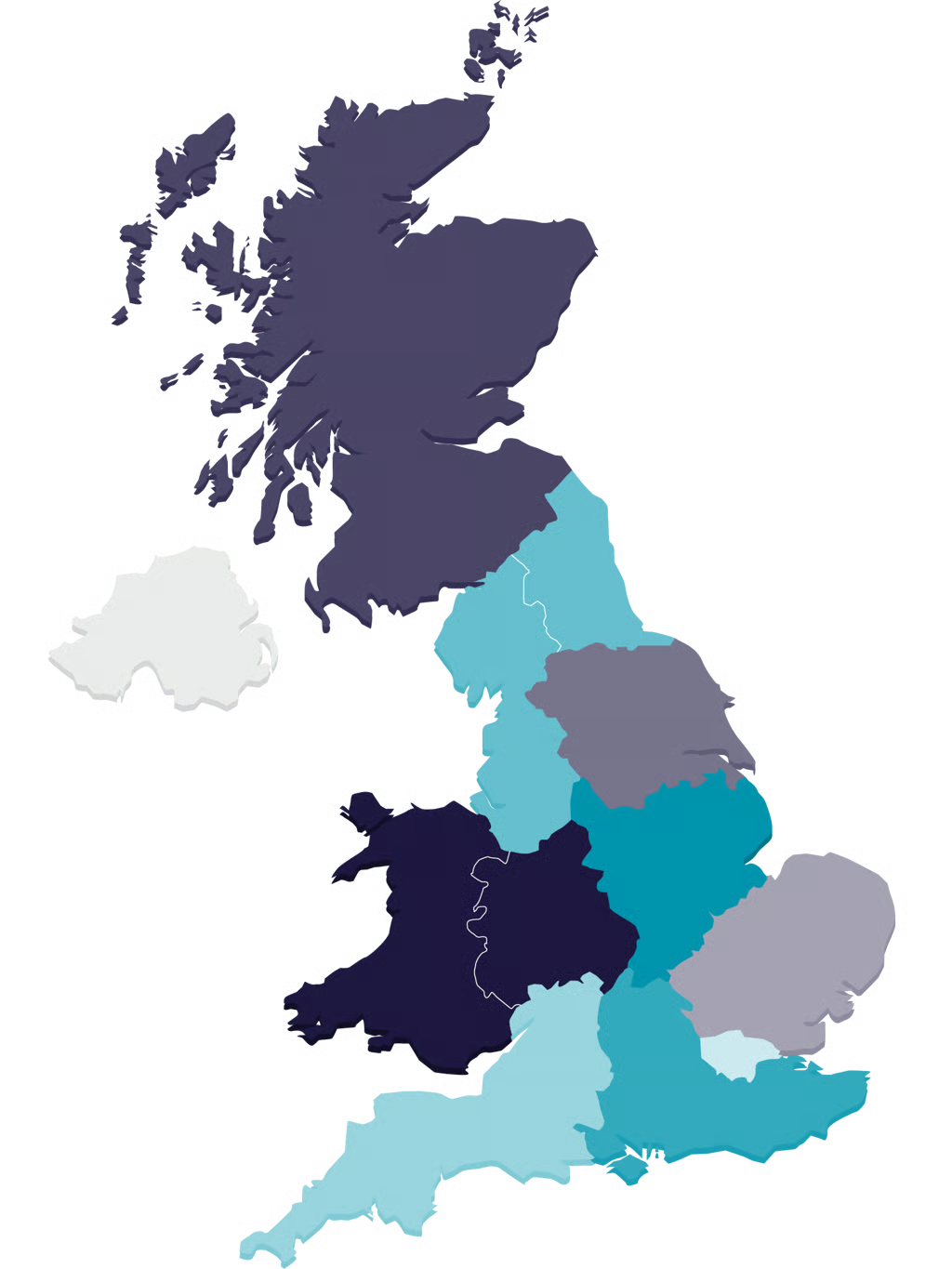
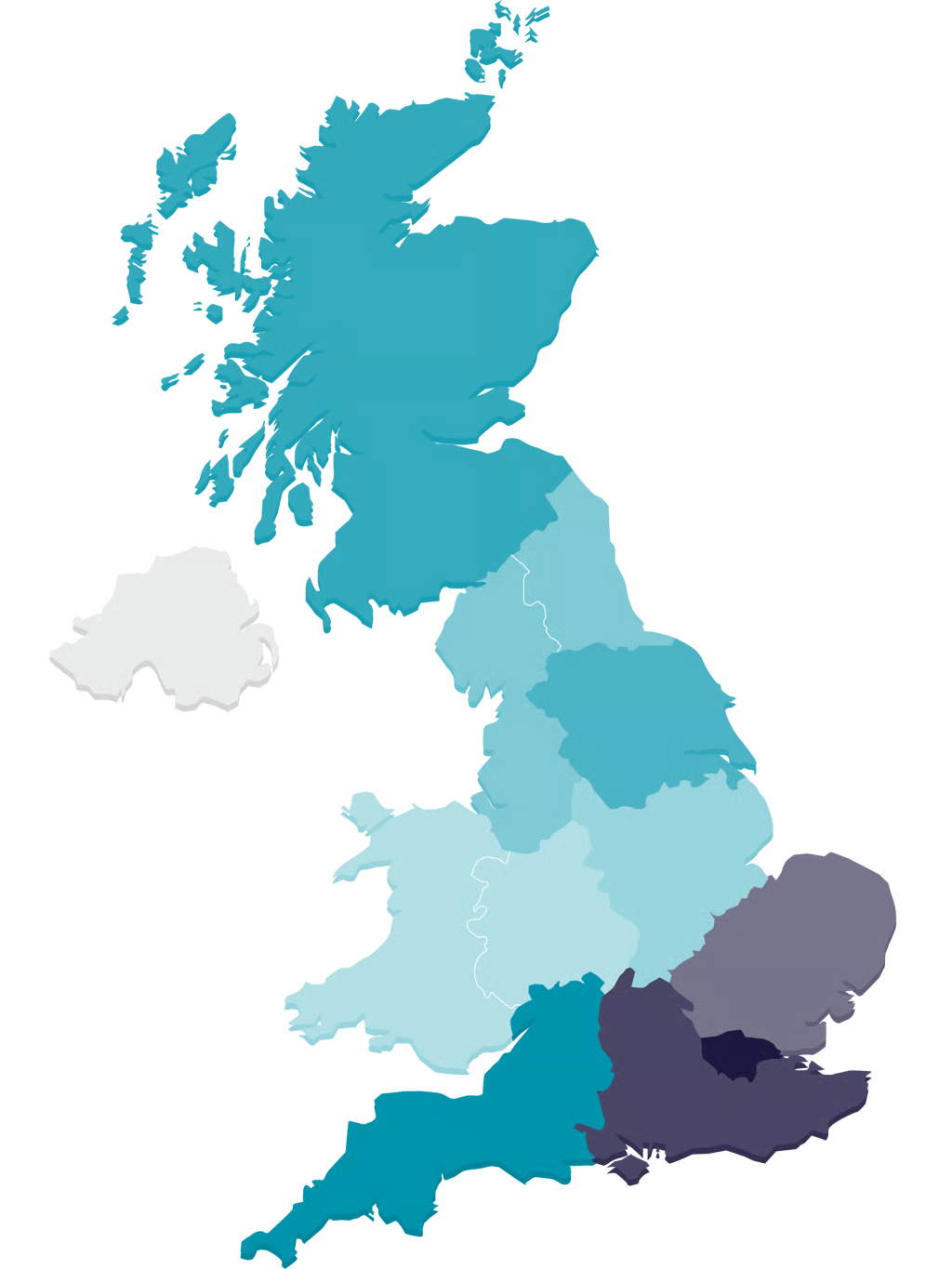
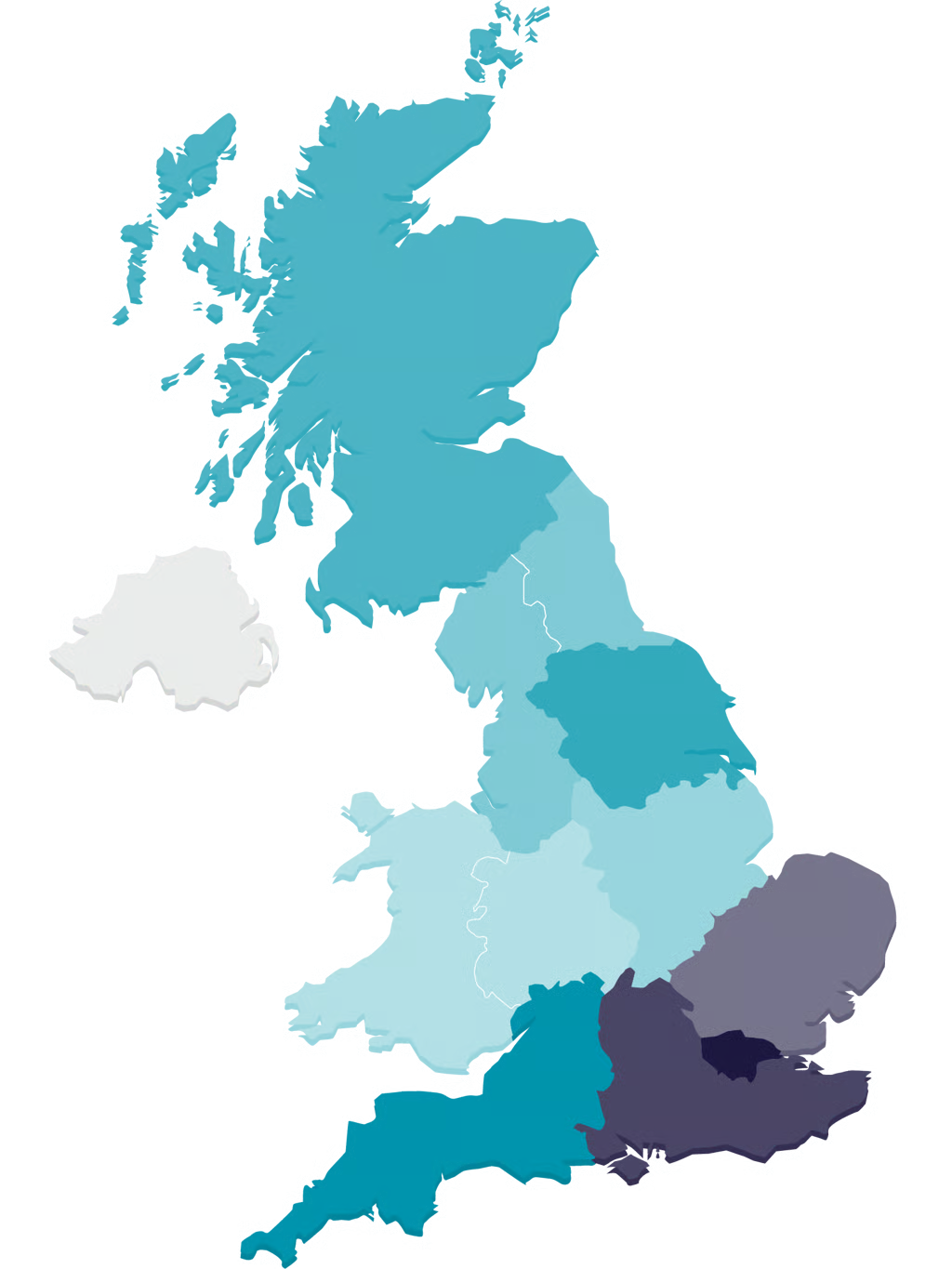
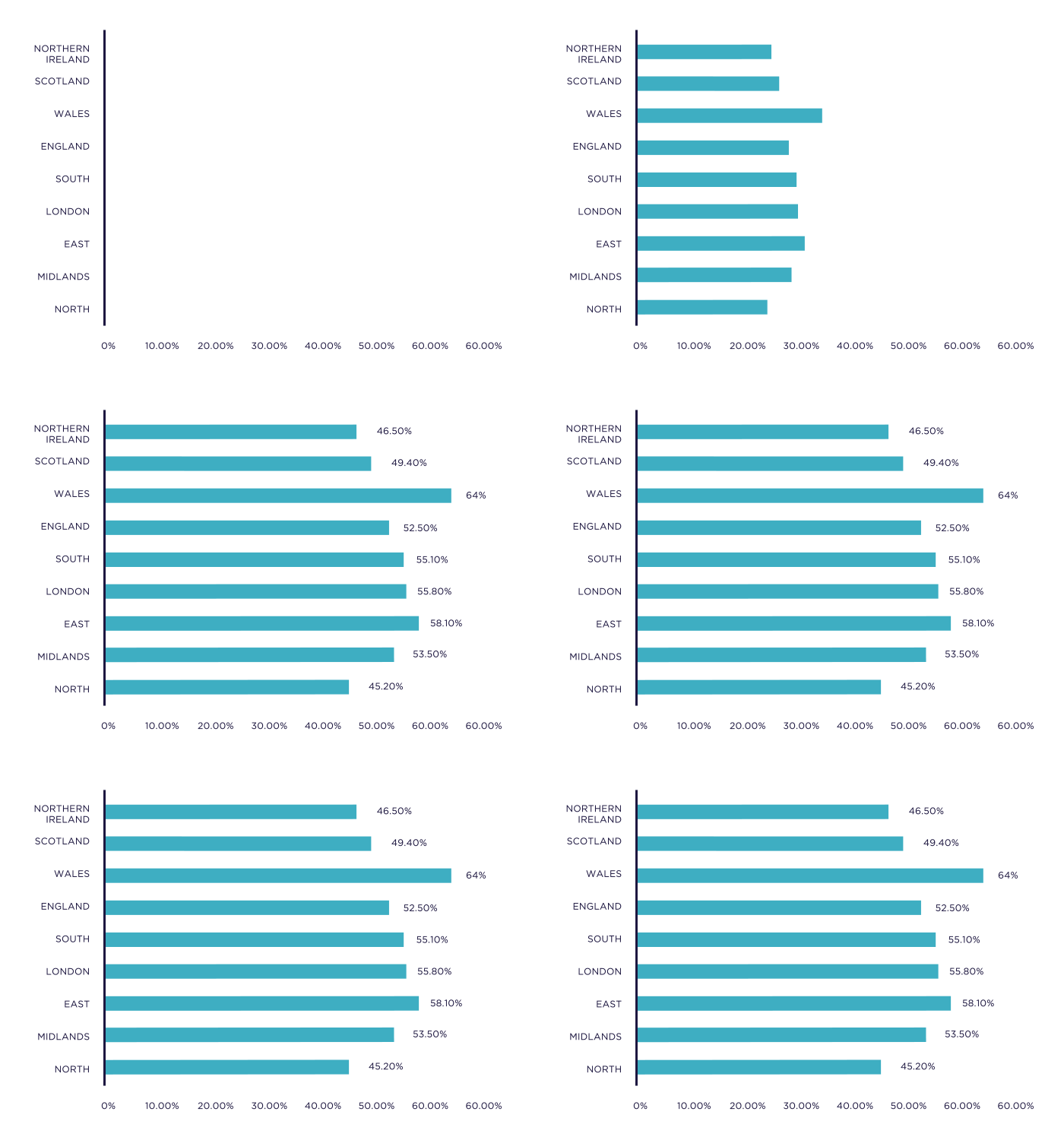
Regional occupancy varies significantly. West Midlands & Wales leads mature occupancy, reflecting strong underlying demand relative to available supply at 84.6%. Scotland is not far behind at 83.4%. London records lower mature occupancy at 77%, reflecting both high supply density and competitive pressures.

Critically, the 2025 occupancy data must be read alongside the revenue decline. Revenue per square foot fell 5.4% to £27.40 from £28.87, suggesting operators may have begun to ease pricing to protect fill levels, an inversion of the 2024 ‘yield over volume’ approach.

THE STICKIER CUSTOMER

Churn Remains Structurally Below Pre-Pandemic Norms

96.6%

CHURN RATE 2025 -
BELOW 100% FOR THE FIFTH CONSECUTIVE YEAR, MEANING NET CUSTOMER RETENTION

Occupancy Rate on Lettable Area 2013–2025

124.1%

PRE-PANDEMIC AVERAGE

96.6%

2025 PRE-PANDEMIC

EQUILIBRIUM

Churn, the ratio of move-outs to average occupied units over a year remains one of the industry’s most revealing performance metrics. A churn rate above 100% means more customers are leaving than the average number of occupied units, requiring constant replacement;
below 100% indicates net retention.

The decade-long trend tells a structural story. Between 2015 and 2019, churn declined steadily from 131% to 117.5%, reflecting a gradual shift toward longer-staying occupants. The pandemic accelerated this trend

dramatically, driving churn to a record low of 76.5% in 2021. Since then, churn has partially rebounded, reaching 97.5% in 2023 and 97.1% in 2024, albeit over the last three years, it has been relatively consistent, ranging

from 97.5% in 2023 to 96.6% as of 2025.

The new equilibrium, approximately 20 percentage points below the pre-pandemic average, has significant implications. Lower churn means more predictable revenue, higher customer lifetime value, and reduced

marketing and re-letting costs. However, it also means that when customers do leave, operators face a smaller pool of natural replacements.

Mature store churn increased from 68.4% in 2024, to 97.2%, indicating a marked shift in mature stores ability to retain customers.

The Container Revolution

Reshaping UK Supply

40%

of new openings

in 2025 were

container-based

Number of stores opened per operator

230

TOTAL

NEW STORES

48%

external container
based storage

39,507 sq ft

Average

Store Size

Container-based stores continue to reshape the supply mix.

In 2025, around 230 new stores opened, with an increasing proportion being external container-based storage (48%). For context, three years ago, 87% of new stores were internal. The lower capital requirements and faster deployment timelines remain attractive, particularly for regional operators and new market entrants targeting suburban and rural locations.

The average store size has continued to decline as a direct consequence

of the smaller footprint typical of container operations. Average internal store size has decreased marginally to 39,507 sq ft from 40,299 sq ft a

year previous.

Operational Dynamics

Cost Structure and Conversion Performance

Conversion Rate of Enquiries

OPERATING

EXPENSE

BREAKDOWN (2025)

Click outer

button to

LEARN more

OPERATING

EXPENSE

BREAKDOWN (2024)

Click outer

button to

LEARN more

Average Number of Staff per Store

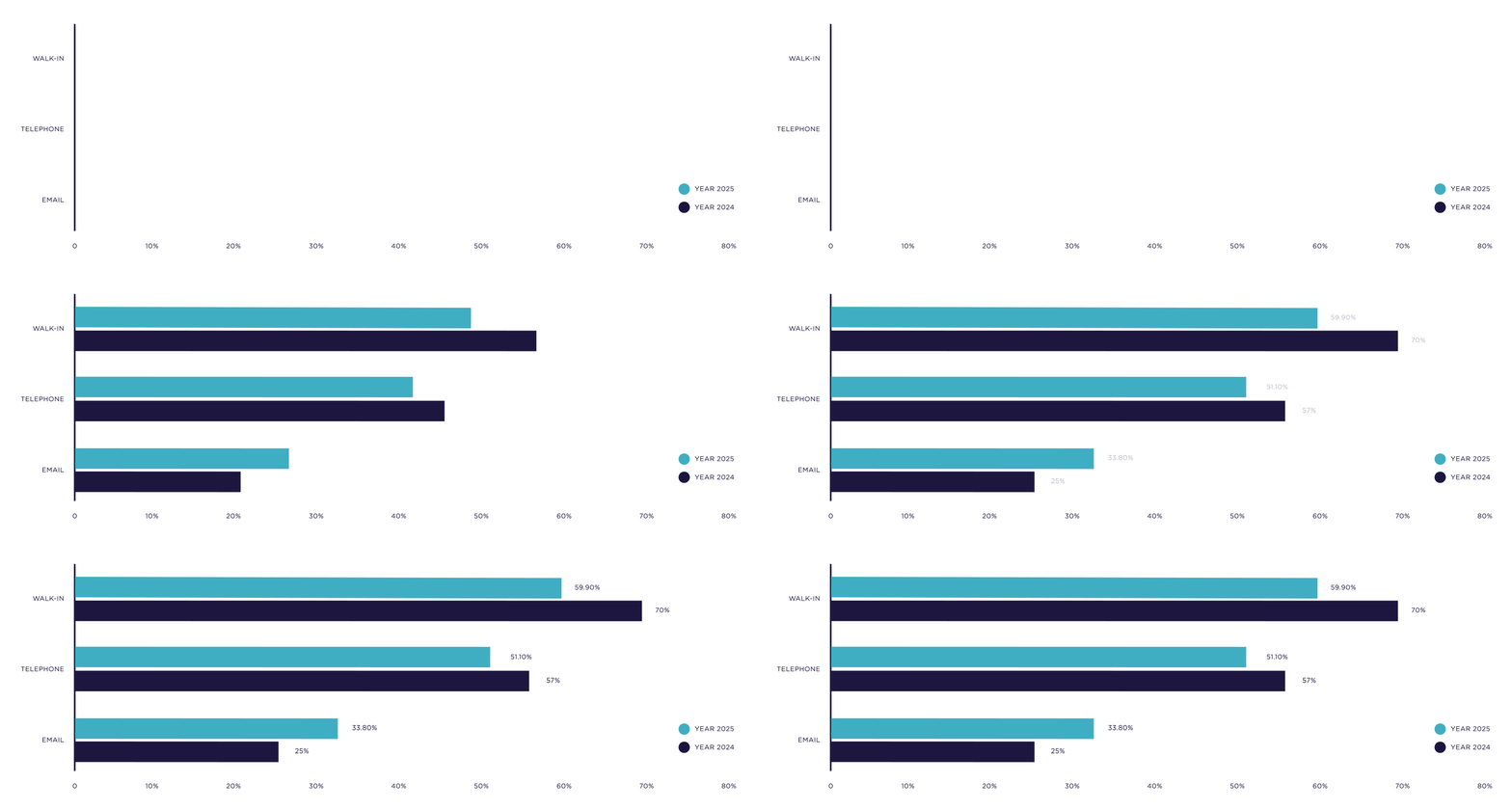
Conversion rates declined for Walk-in and telephone enquiries, but increased for email. Walk-in conversions fell from 69.7% to 60%, telephone enquiries from 57%
to 51%, while emails increased enquiries from 25.1%
to 33.8%. A shift in behaviour and increased supply options.

The operating cost structure reveals staff costs as the largest expense category at 27% of total operating expenditure, followed by rates and taxes at 18%. Online marketing accounts for 9% of costs, with a notable shift of some budget toward offline and local marketing channels (offline marketing at 3.3%).

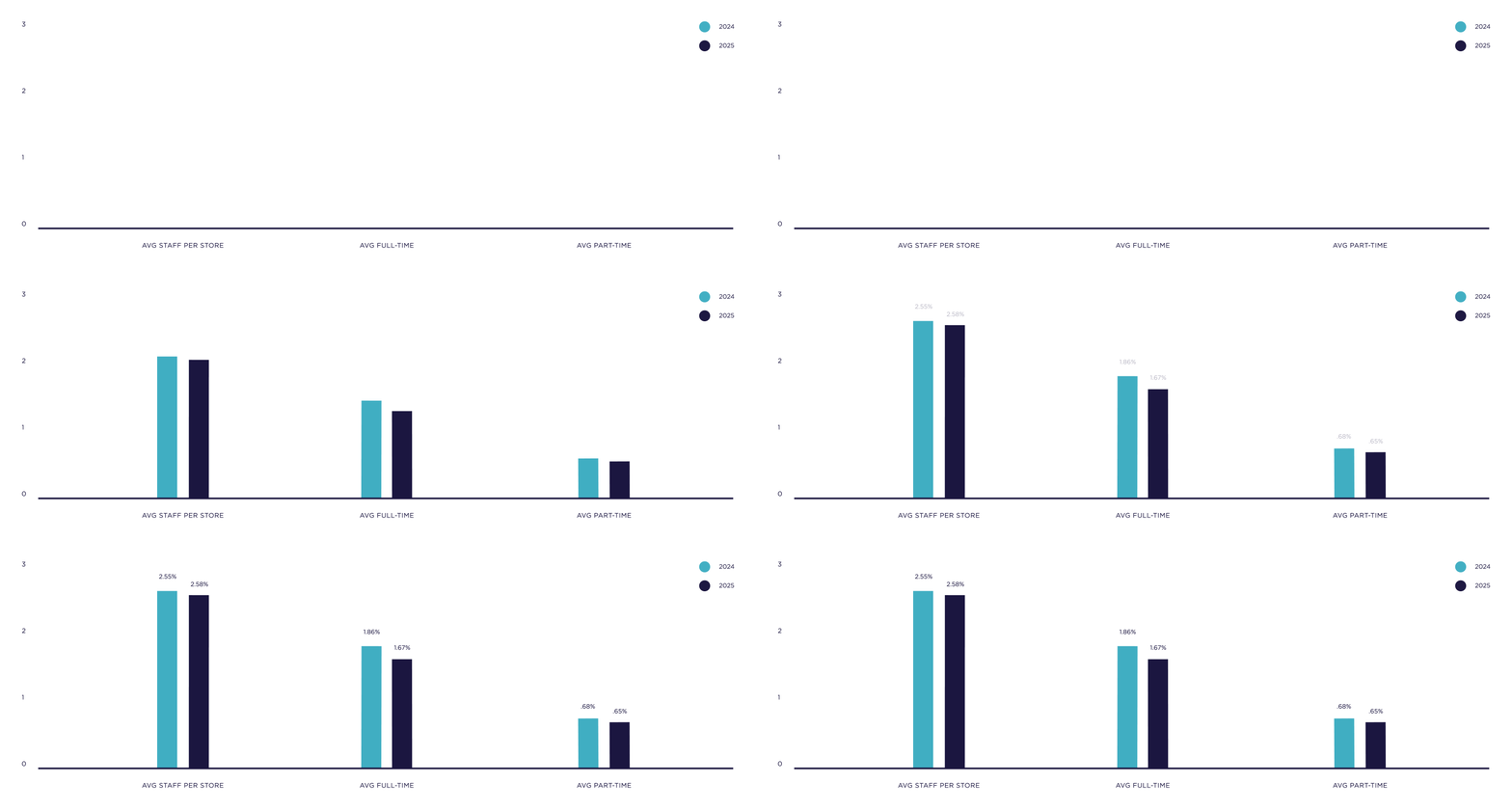
Average staffing levels fell to a record low of 2.6 per store, 14% down since the levels of 3.3 at the start of the Pandemic. Even as recently as 2023, staffing was at 3.0 per store, with a significant change occurring over the last two years. This structural decline reflects the adoption of technology (app-based access,

AI-monitored CCTV), centralised management, and the growth of remotely managed facilities (16.2% unmanned stores). The industry is becoming progressively more
capital-intensive and less labour-intensive.

Regional Dynamics

Revenue Pressure Hits Hard Across Most Markets

£27.40

-5.4%

YoY

Revenue Per Sq Ft
Per Region (2024 vs 2025)

Incentive Levels

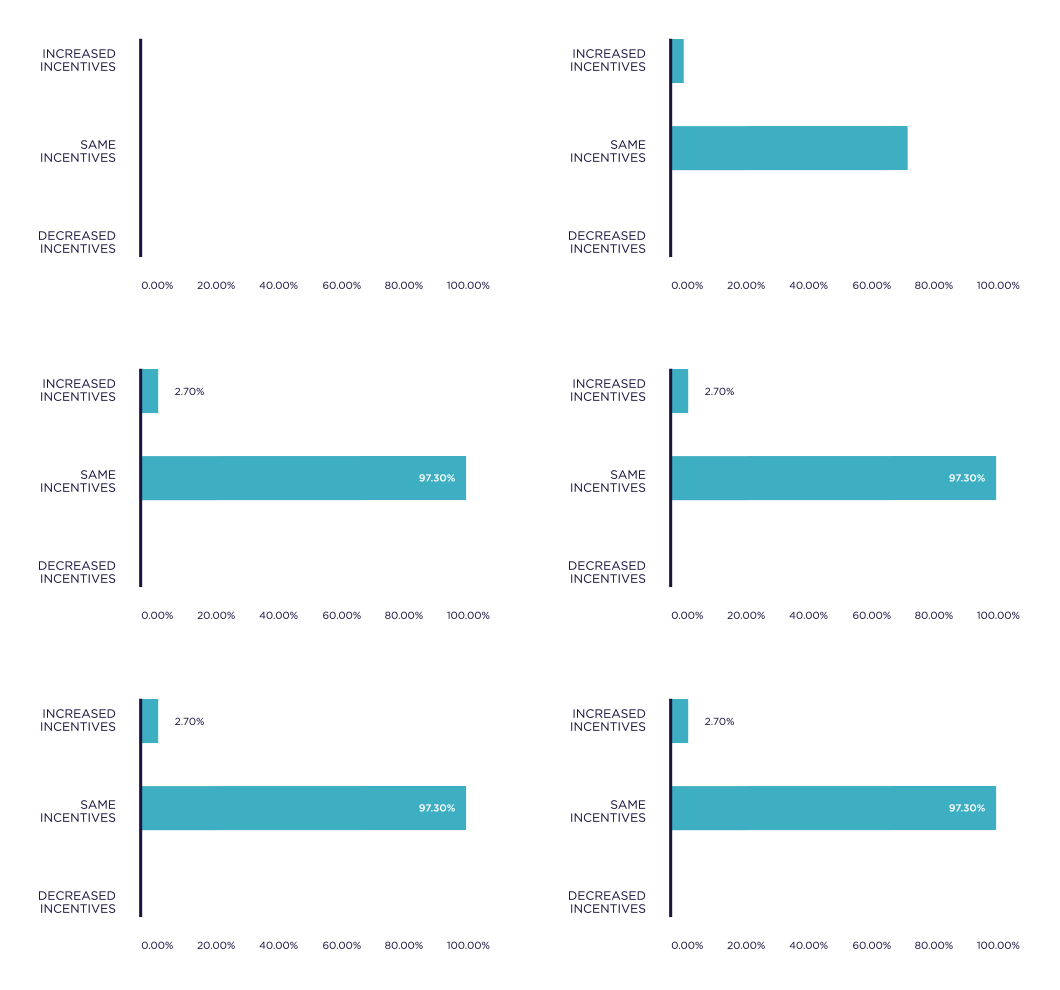
Despite revenue

pressure, 97.3% of

operators maintained

the same incentive levels

Revenue per

Sq Ft by Region

Click button to LEARN more

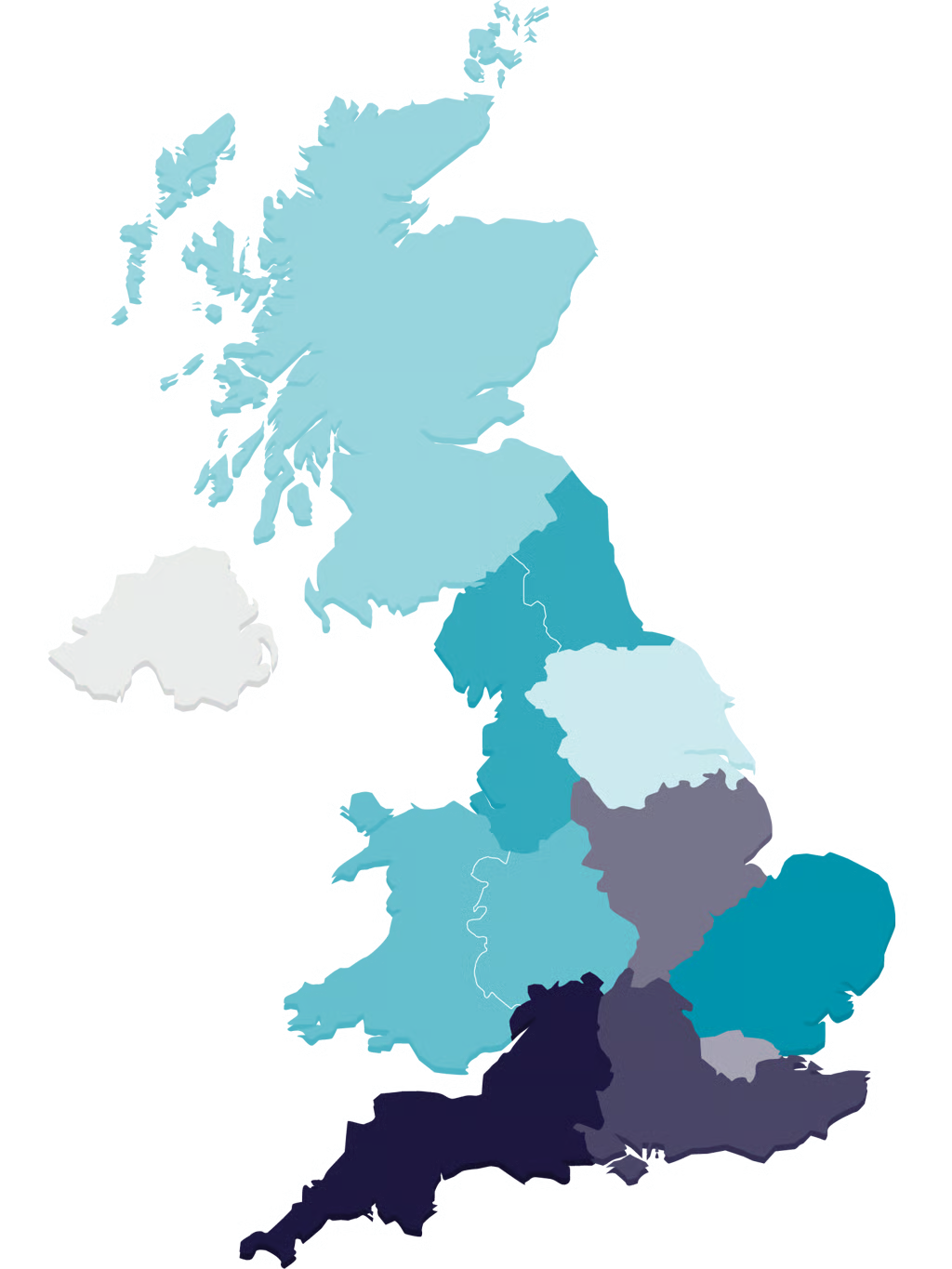
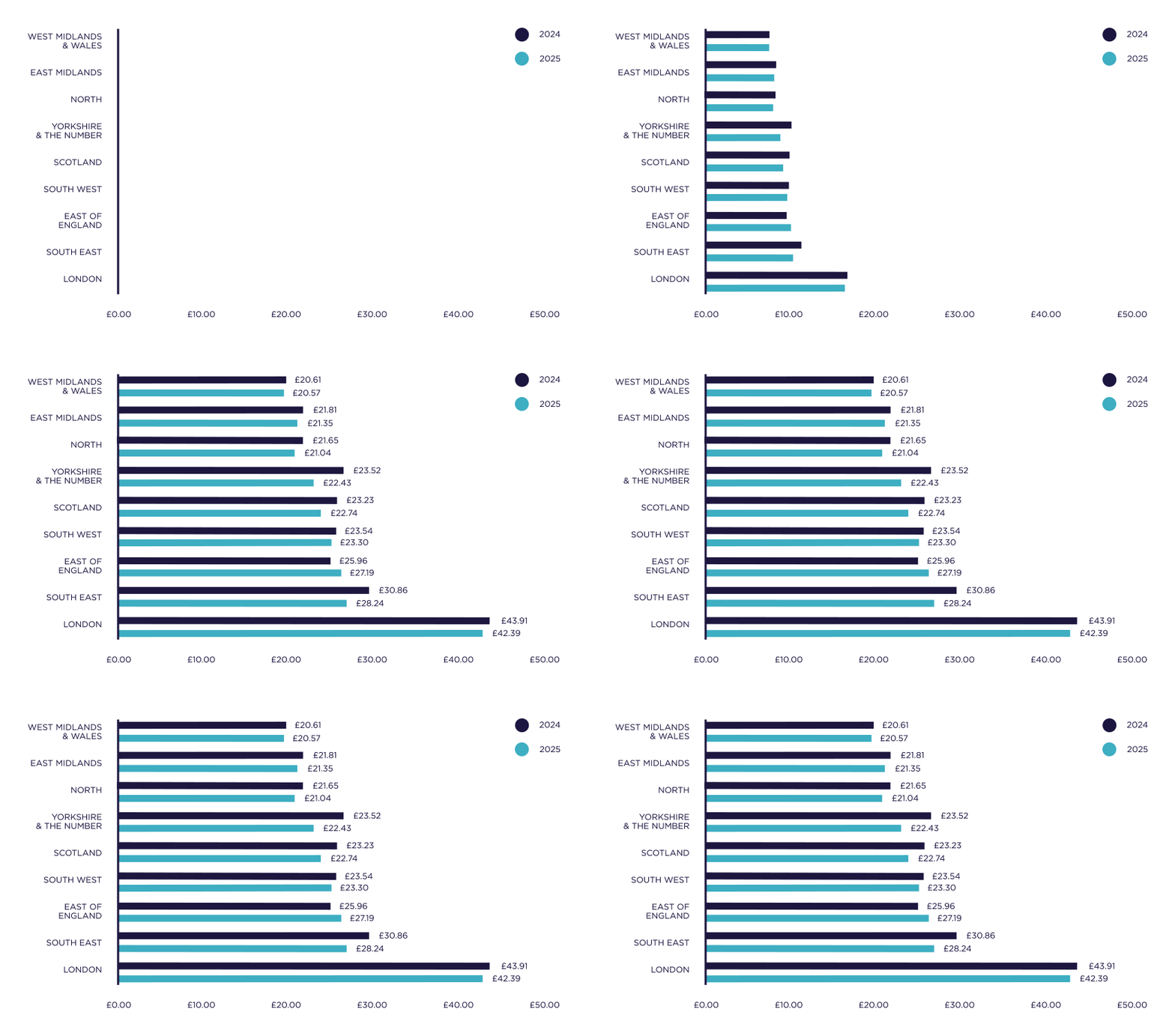
Regional performance in 2025 diverged sharply from the 2024 pattern, with revenue per square foot declining across virtually all markets. The UK average fell 7.4% to £26.97, a reversal from the growth recorded in 2024.

London, which had led rate growth in 2024, declined 3.5% to £42.39. The South East recorded the steepest fall at -8.5% (to £28.24), followed by East of England at -4.5% (£25.96). The South West (-1.0%, £23.30) and West Midlands & Wales (-0.2%, £20.57) were relatively resilient.

The North stands as the only region with positive revenue growth at +2.9%, reaching £21.65 per square foot. This may reflect the region’s lower base, leaving more headroom for pricing, or a genuinely stronger local demand environment.

Several factors may explain the correction. Two years of aggressive rate increases may have tested consumer tolerance. Increased new supply, particularly from container operators, has expanded customer choice. The lingering cost-of-living environment continues to weigh on discretionary spending. Dynamic pricing, while enabling rate optimisation, may also have contributed to over-pricing in some markets.

The key strategic question for 2026 is whether this correction represents a temporary recalibration or a more structural shift in the pricing environment. The occupancy data (74.5% vs 75.1%) suggests operators are beginning to trade rate for volume.


2025 REVENUE

2025 REVENUE

Investment Turnover

Relatively quiet 2025, with backloaded activity

Q4 2025

Padlock Funds

QuadReal announces it is

close to a deal with Clear

Sky Capital

Q2 2025

harrison Street and Pacific Investments JV

the Joint Venture

announces plans

Q1 2025

Quick Self Storage

a freehold asset in Peterborough was

acquired by L&G

Q3 2025

Storage World

Shurgard acquired two

sites in Manchester in a combined deal

Q1 2025

Project Nickel

three sites acquired by Schroders Capital

Q1 2025

Jumbo Self Storage

three sites across the

Midlands region

Transactional activity in 2025 was characterised less by portfolio turnover and more by platform level strategic activity, including public to private interest in listed REITs and selective portfolio aggregation by scaled operators. The sector continues to benefit from structural demand drivers, inflation linked income and relative resilience.

Investor appetite remained strong, particularly from private equity and sovereign/institutional capital, but pricing tension persisted due to
higher interest rate.

The financial environment improved modestly towards late 2025, with greater confidence in the trajectory of UK base rates, narrowing bid ask spreads and renewed interest in NAV discounted listed vehicles, albeit the conflict in Iran has impacted some of those fundamentals. The strong end to 2025 and early 2026 are represented by the Cinch portfolio, which exchanged in late 2025.

Looking Ahead

Operator Sentiment for 2026 and Beyond

Operator Outlook 2026

Ability to reserve units online

41.7%

No online
reservation at all

9.6%

Reserve only
(no payment)

48.7%

Can reserve
AND pay for a unit online

Expectations for rental growth

Operator sentiment data from the 2025 survey shows a cautiously optimistic picture for 2026. The majority of operators (55.2%)

reported ‘some improvement’ over the prior year, while 29.3%

described performance as ‘the same as last year’. A smaller proportion (8.6%) reported a ‘slight downturn’, and 1.7% described it as a

‘hard year’. It is worth treating this with some caution as the survey was conducted prior to the War in Iran. This may well have changed in light

of recent developments and the knock on impacts on the cost of energy

and inflation.

Overall, 60.3% of operators were positive, 29.3% neutral, and 10.3% negative. Given the 7.4% revenue decline in 2025, the relatively positive sentiment may reflect operators’ confidence in the long-term growth trajectory of the sector despite near-term pricing pressure.


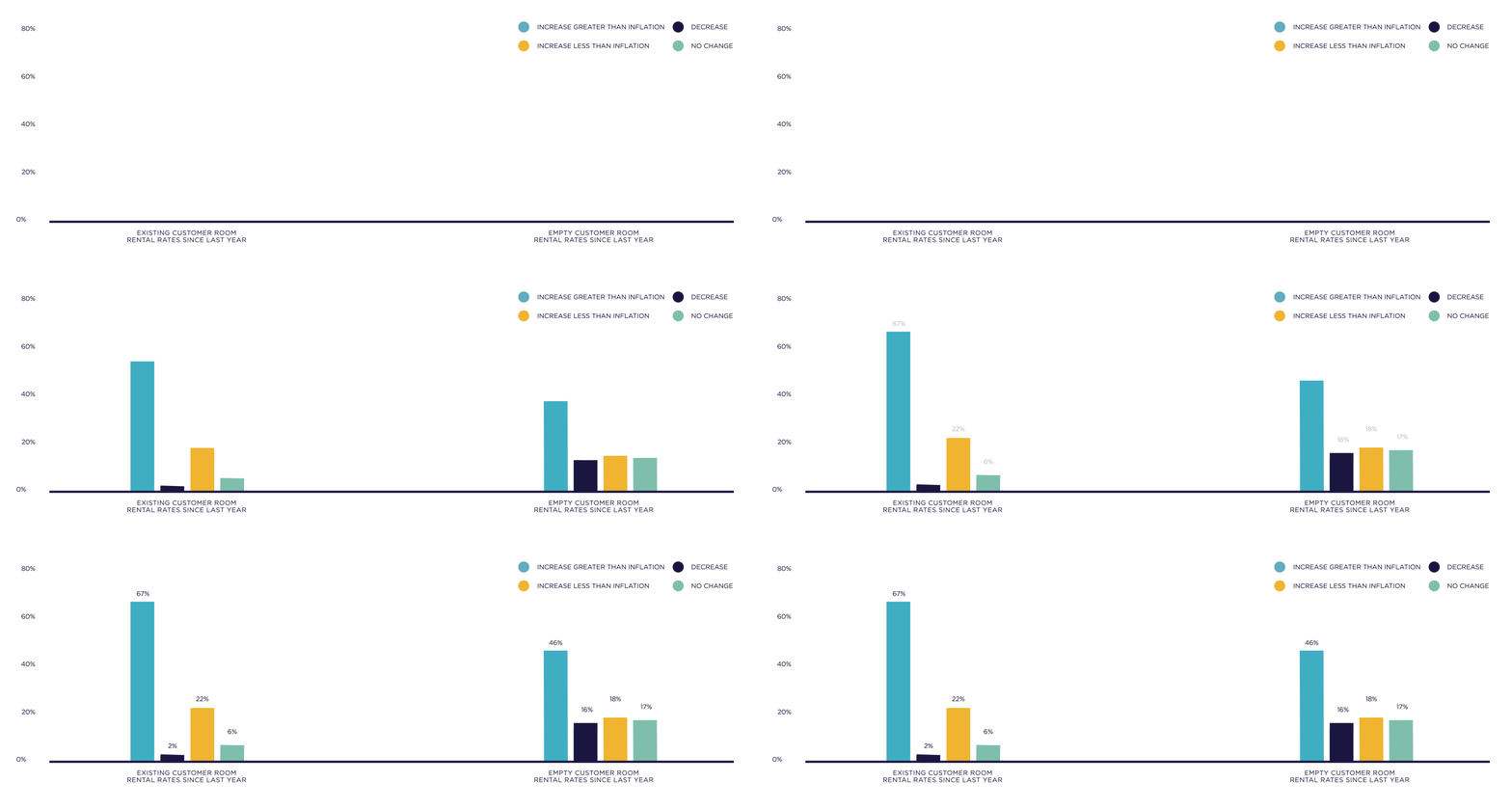
Rental growth expectations in the 2025 report revealed a bifurcated pricing strategy: operators were more confident about raising rates

for existing customers than new customers. This dynamic should be reassessed in light of the 2025 revenue correction.

Who Uses Self Storage?

An Ageing Customer Base

45 - 49

2024 peak age group

55-64

2025 peak age group

now 31% of all customers

41.4%

Female

Customer

54.7%

Male
Customer

75.9%

Domestic
Customer

24.1%

Business

Customer

85.9%

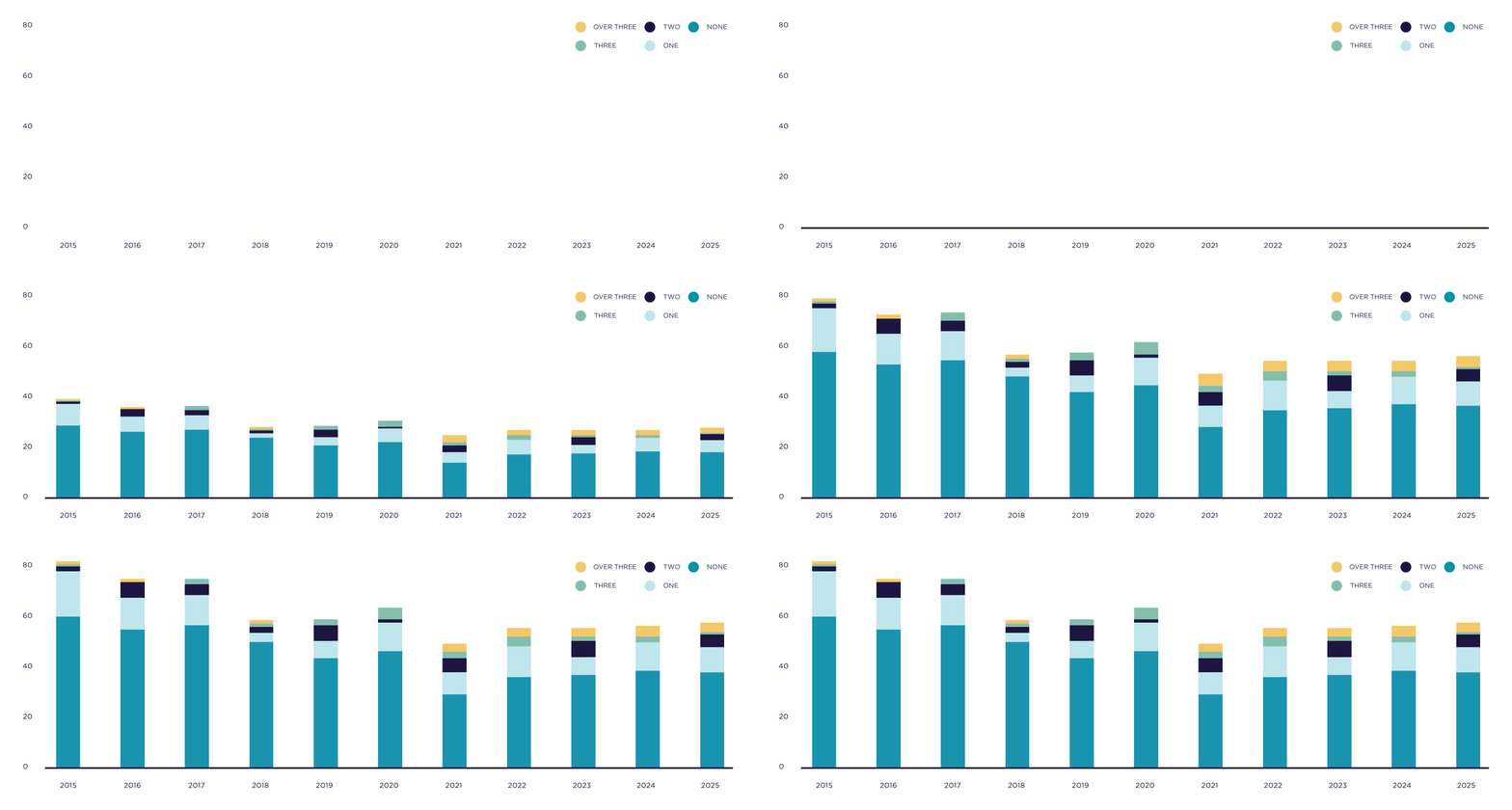
rent 1 unit

232

survey responses

The under-35 cohort remains underrepresented

a challenge for long-term growth and digital expectations.

The domestic/business customer split has shifted to 75.9% domestic and 24.1% business, compared with 73/27 in the 2025 report. This movement toward a higher domestic share may reflect the revenue pressure environment, where business customers often more price-sensitive at entry have reduced or consolidated their storage footprint.
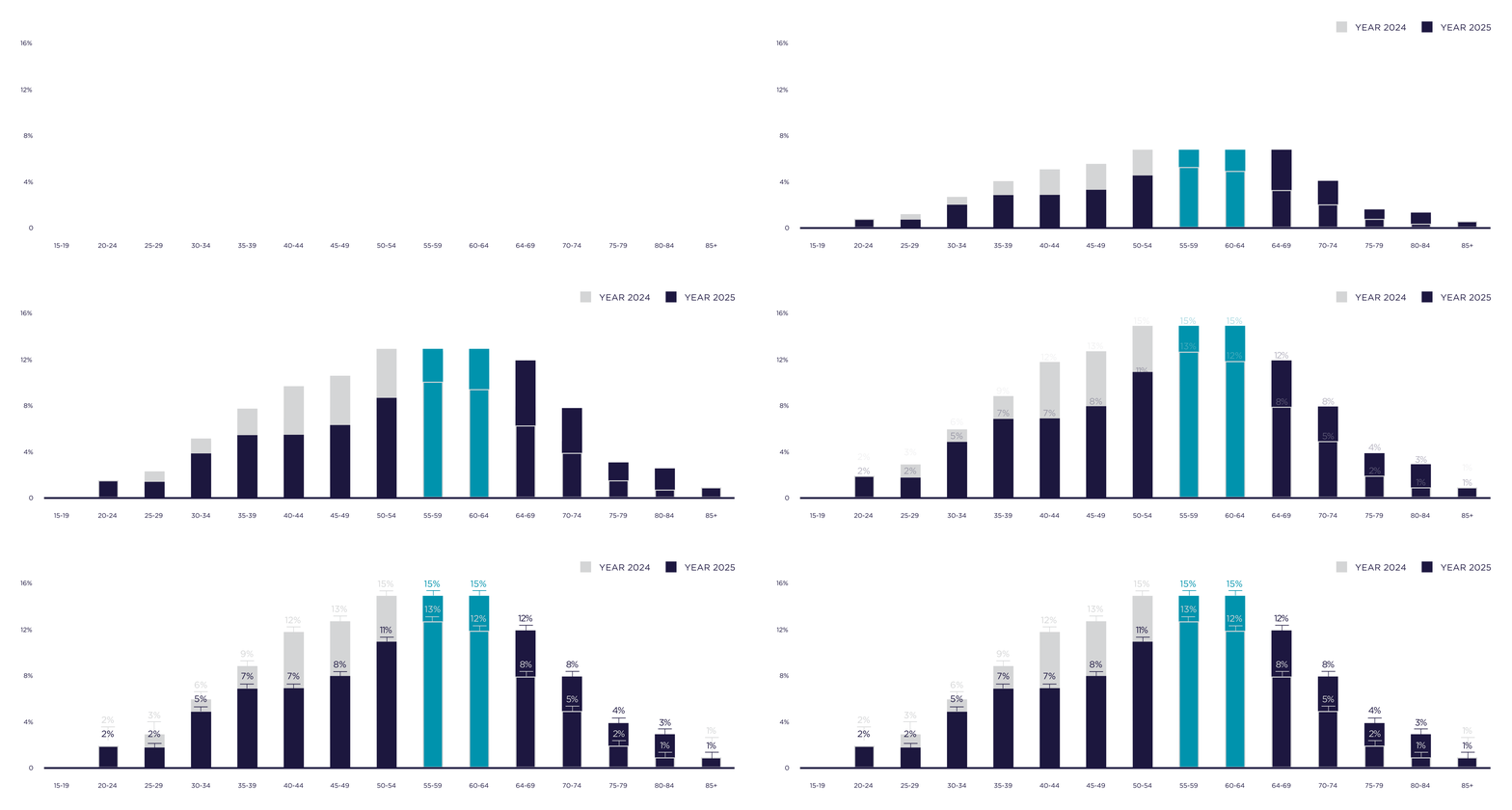
The most significant demographic shift is in customer age. The peak age bracket has moved from 45–49 (which was 15% a year ago but now stands just 8%) to 55–64, with both the 55–59 and 60–64 groups at 15.5%, giving a combined 31% share. The 65–69 group adds another 11.5%. This ageing of the customer base has important implications for marketing strategy, digital adoption expectations, and long-term demand forecasting.

The under-35 cohort remains underrepresented: 20–24 accounts
for just 1.8%, 25–29 for 2.2%, and 30–34 for 4.9%. Meanwhile, the
35–39 group at 7.1% and 40–44 at 6.6% are both below their 2025 levels. The industry faces a challenge in attracting younger demographics who may have different expectations around digital experience, pricing transparency, and service delivery. Gender split remains broadly consistent at 54.7% male and 41.4% female. Unit rental patterns show 85.9% of customers renting a single unit, 10.6%
renting two units, and 3.5% renting three or more."

The Awareness Breakthrough

First Meaningful Gain in a Decade

52.6%

Good awareness up from

48.1%, the first meaningful

gain in a decade

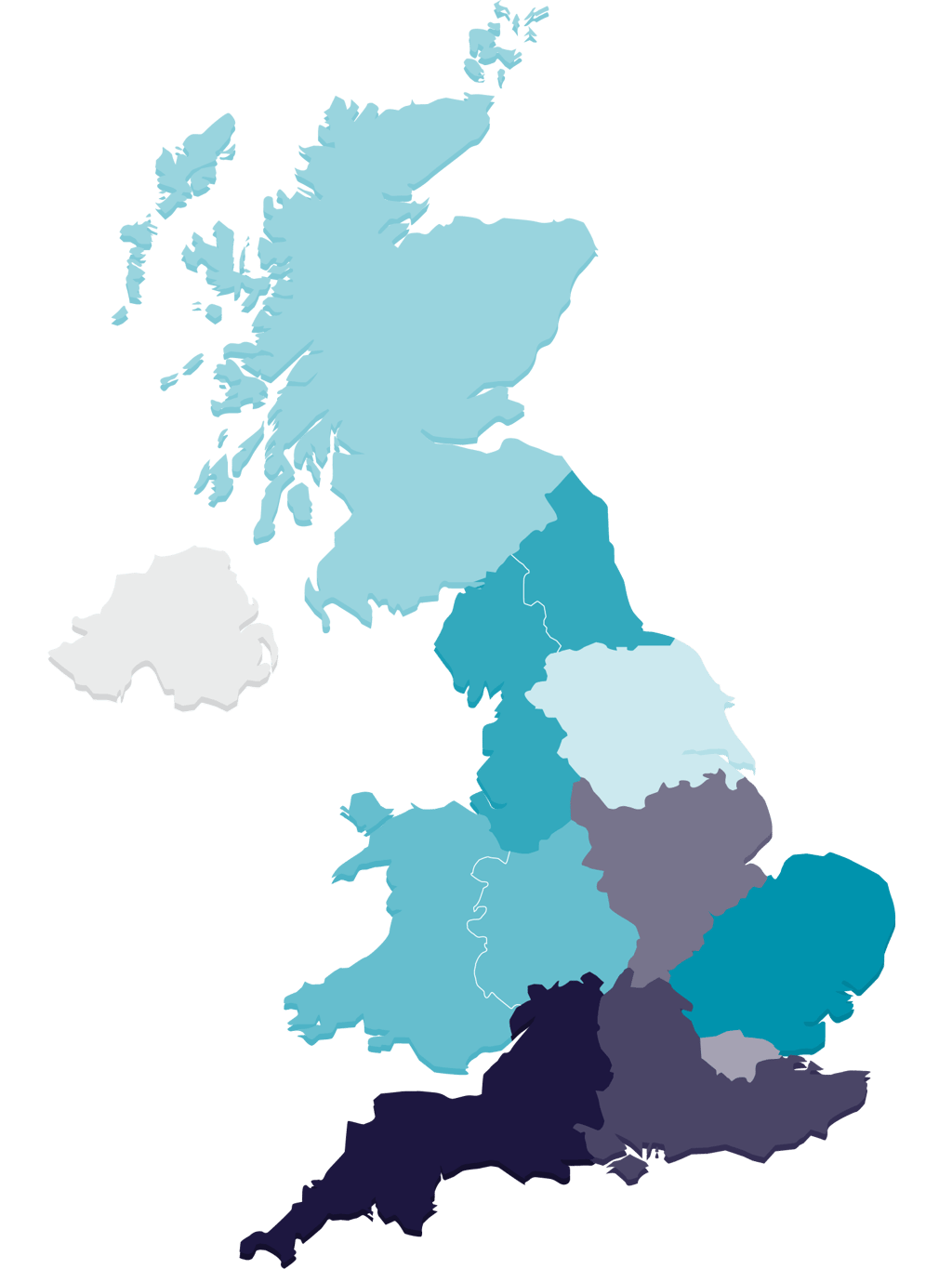
Awareness by Region

Click outer

button to

LEARN more

RECOGNITION
DRIVER

Awareness of Self Storage Features

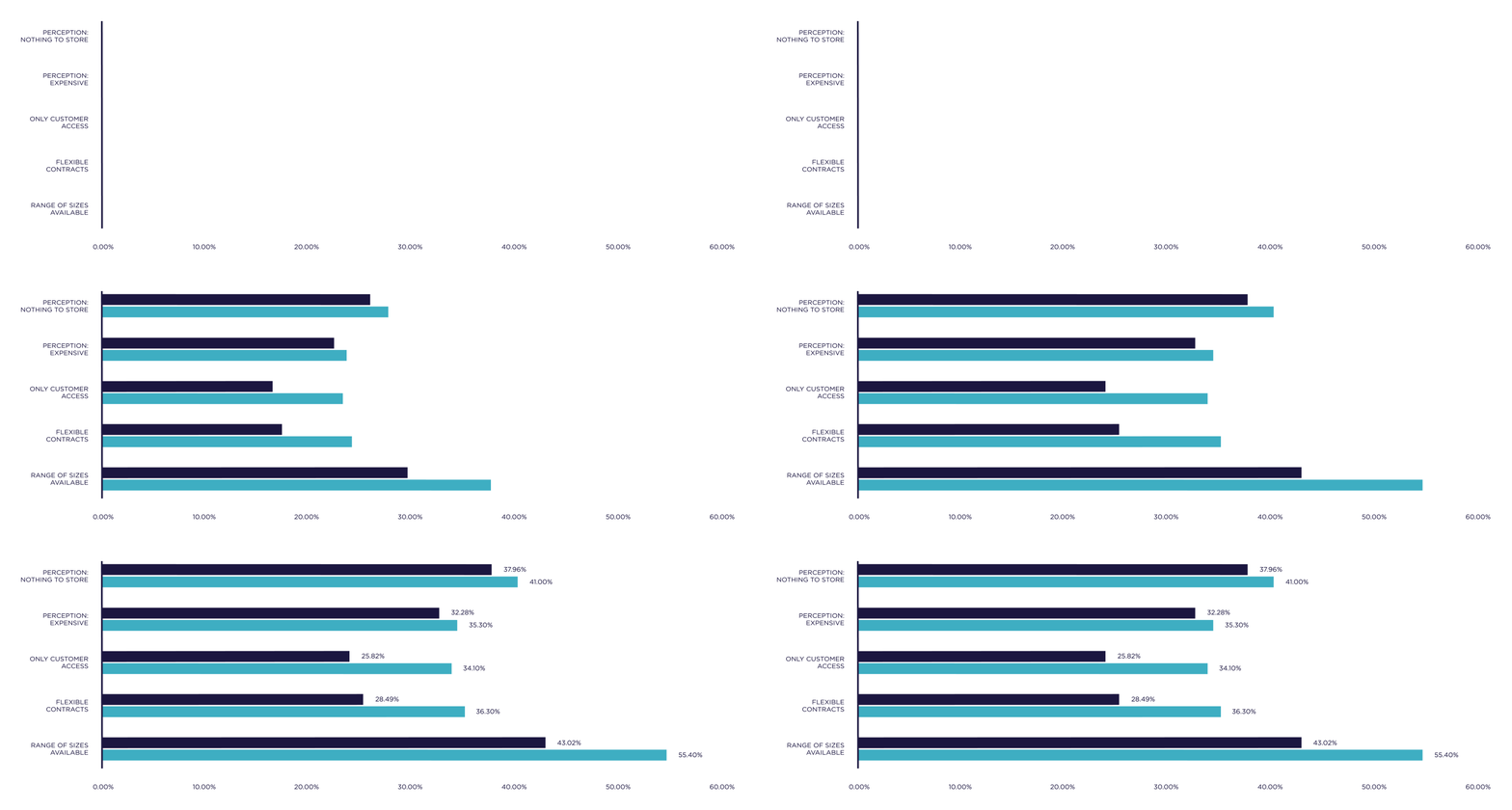
41%

who believe they have nothing to

store represents the industry's

single largest awareness challenge.

Understanding of key service features shows mixed progress:

55.4% know that self-storage offers a range of sizes, 36.3% understand that contracts are flexible, and 34.1% know that only

the customer can access their unit. The perception that self-storage is expensive persists at 35.3%, while 41.0% believe they have nothing to store.

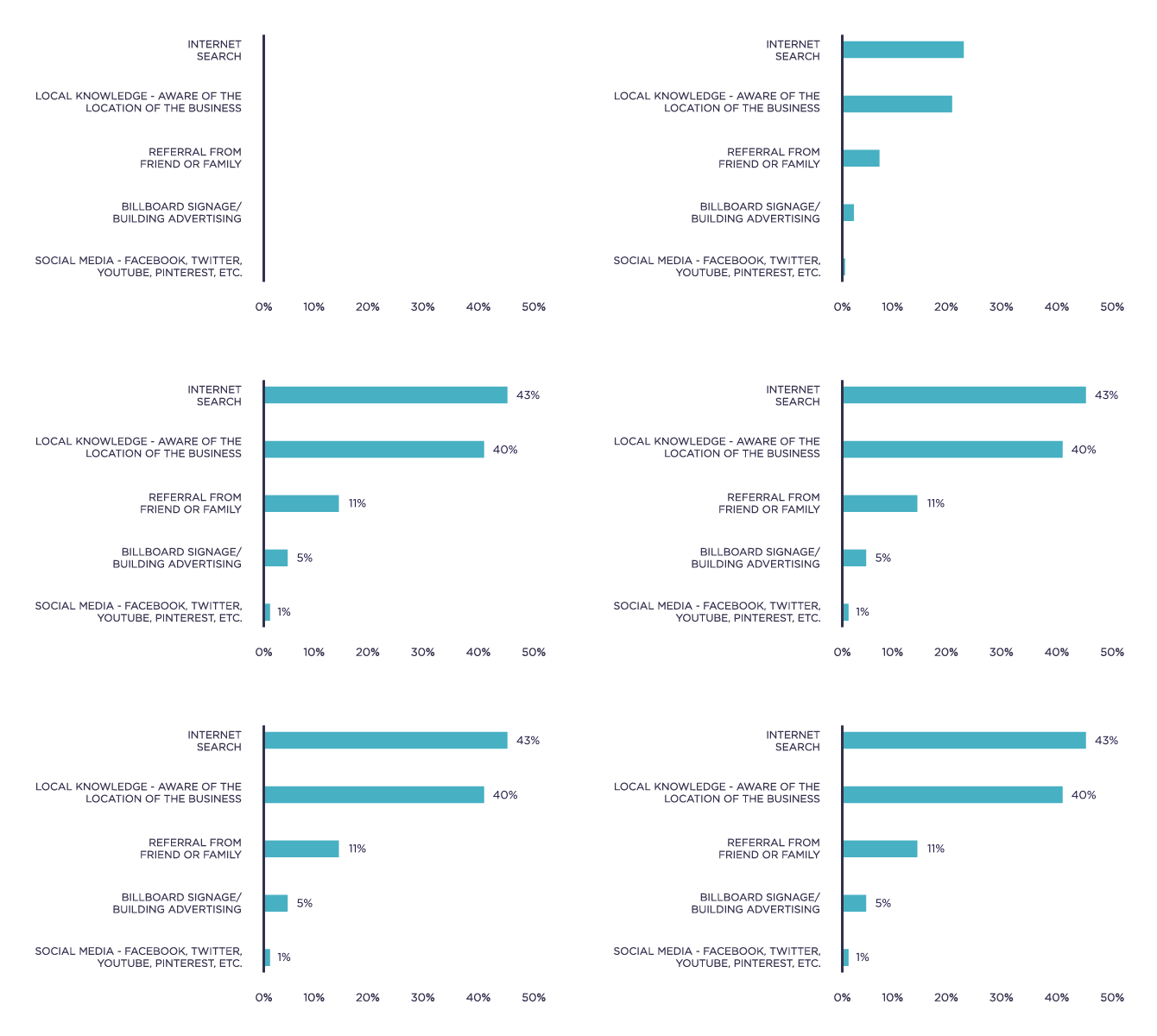
Road visibility remains the dominant awareness driver at 69.2%,

with friend/family referrals at 15.7% and internet at 13.4%. The

‘nothing to store’ perception at 41.0% highlights the continued

need for education-led marketing.

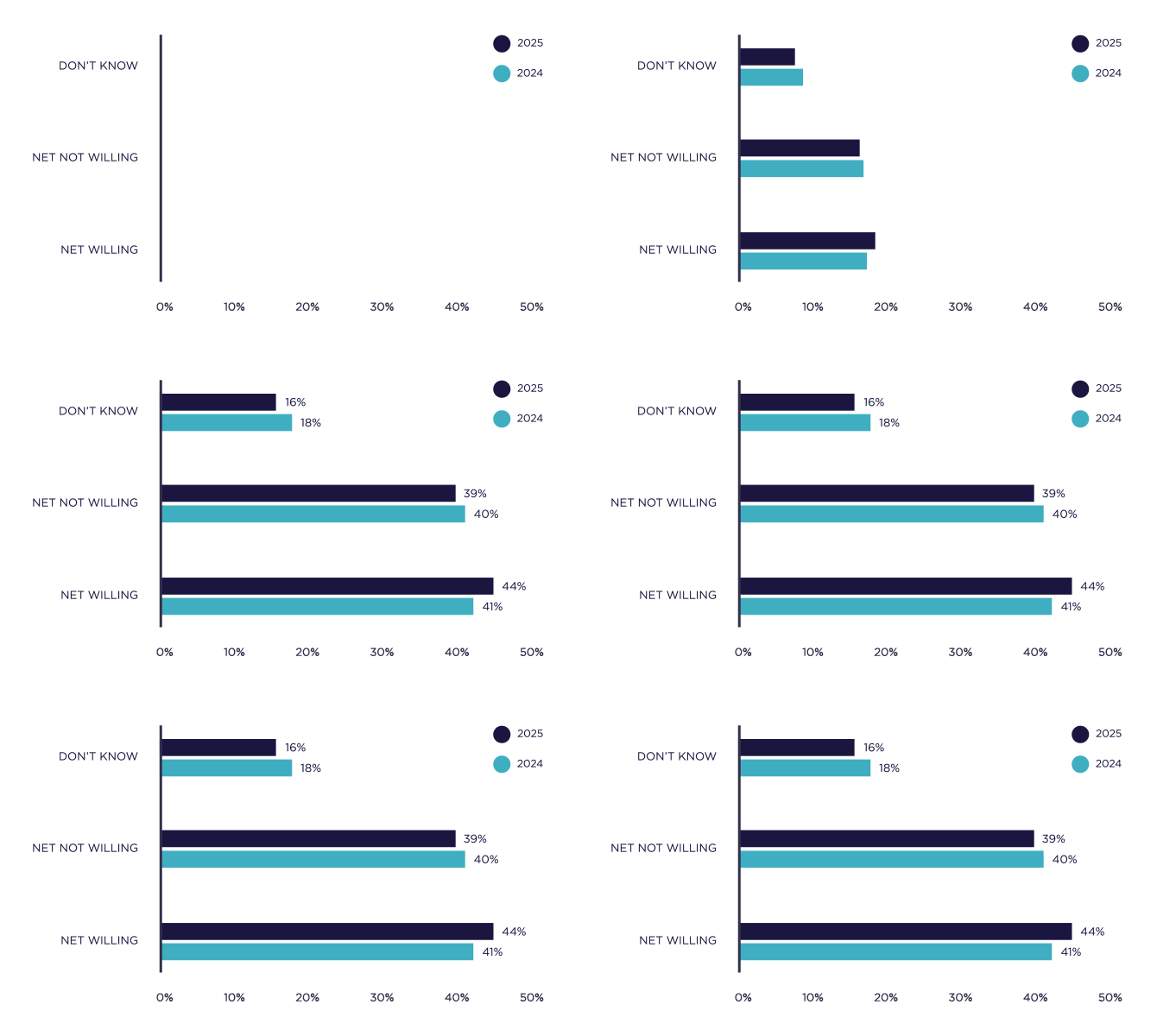
Willingness to use a fully unmanned store stands at

a net positive of 44.1% willing versus 39.4% unwilling. While the willing cohort outnumbers the unwilling,

the relatively narrow margin suggests that a significant proportion of the market still values human interaction, particularly when selecting unit size and understanding terms.

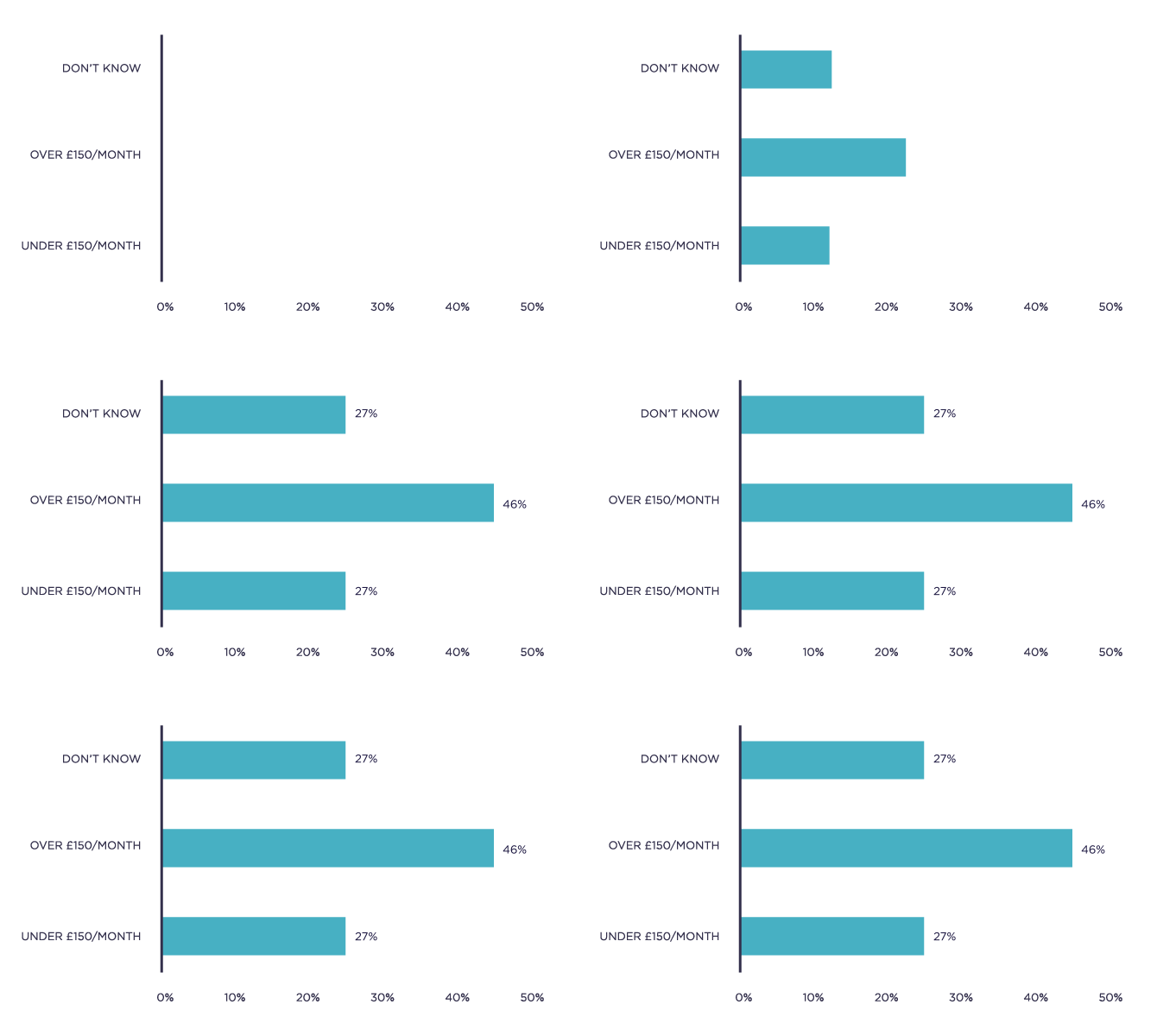
Price expectations show that 27.1% of the public expect storage to cost under £150 per month, 46.4% expect it to cost over £150, and 26.5% don’t know. The high ‘don’t know’ proportion reinforces the awareness challenge identified in Panel 18.

The Customer Journey

From Search to Storage

How customers found
their storage provider

Internet search and local awareness account for

83% of discovery — all other channels are marginal.

Customer booking
preferences

Mobile booking doubled year-on-year to become the leading channel.

Willingness to use

automated sites

Willing outnumber unwilling, but the narrow gap suggests human interaction still matters.

Self-Storage Price

Expectations

More than a quarter of the public have no idea what storage costs.

The customer journey continues to be dominated by digital search Internet search is the primary method for finding

a self storage store at 42.5%, but is down from 55.4% in the prior year. Knowledge of a nearby store (39.7%) and friend/family recommendation (11.2%) remain important secondary channels.

Booking preferences are notably fragmented and have shifted. Mobile booking (33.5%) has edged ahead as

the most preferred channel, marginally above in-store booking (33.4%).

Desktop online booking sits at 21.8%,

with 11.3% expressing no preference.

This fragmentation underscores the

need for a seamless omnichannel

booking experience.

Willingness to use a fully unmanned

store stands at a net positive of 44.1% willing versus 39.4% unwilling. While the willing cohort outnumbers the unwilling, the relatively narrow margin suggests that a significant proportion of the market still values human interaction, particularly when selecting unit size and understanding terms.

Price expectations show that 27.1% of the public expect storage to cost under £150 per month, 46.4% expect it to cost over £150, and 26.5% don’t know.

Why People Store

Life Events, Space Needs & Business Demand

PEOPLE'S USES OF SELF STORAGE

Business uses of Self Storage

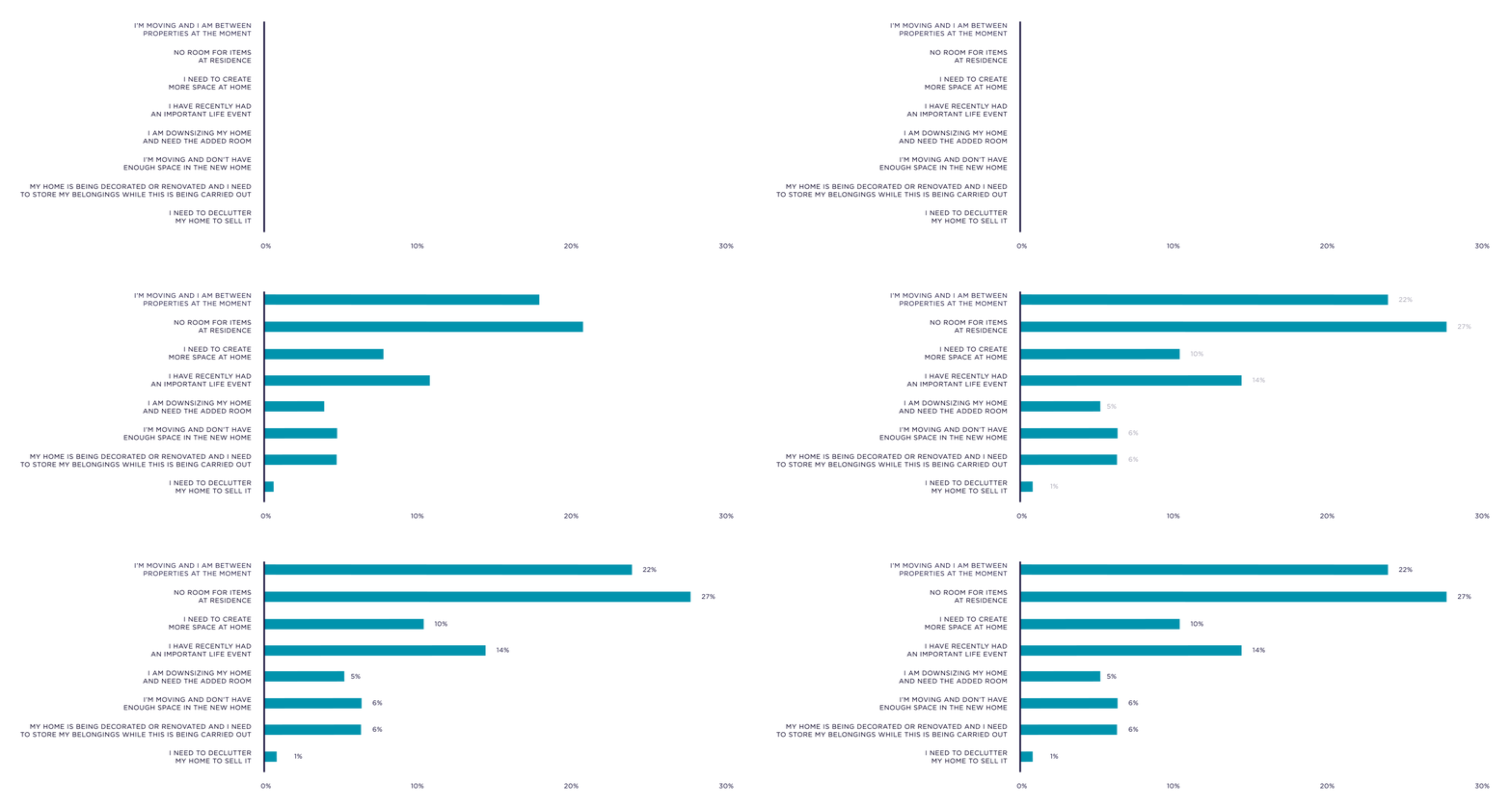
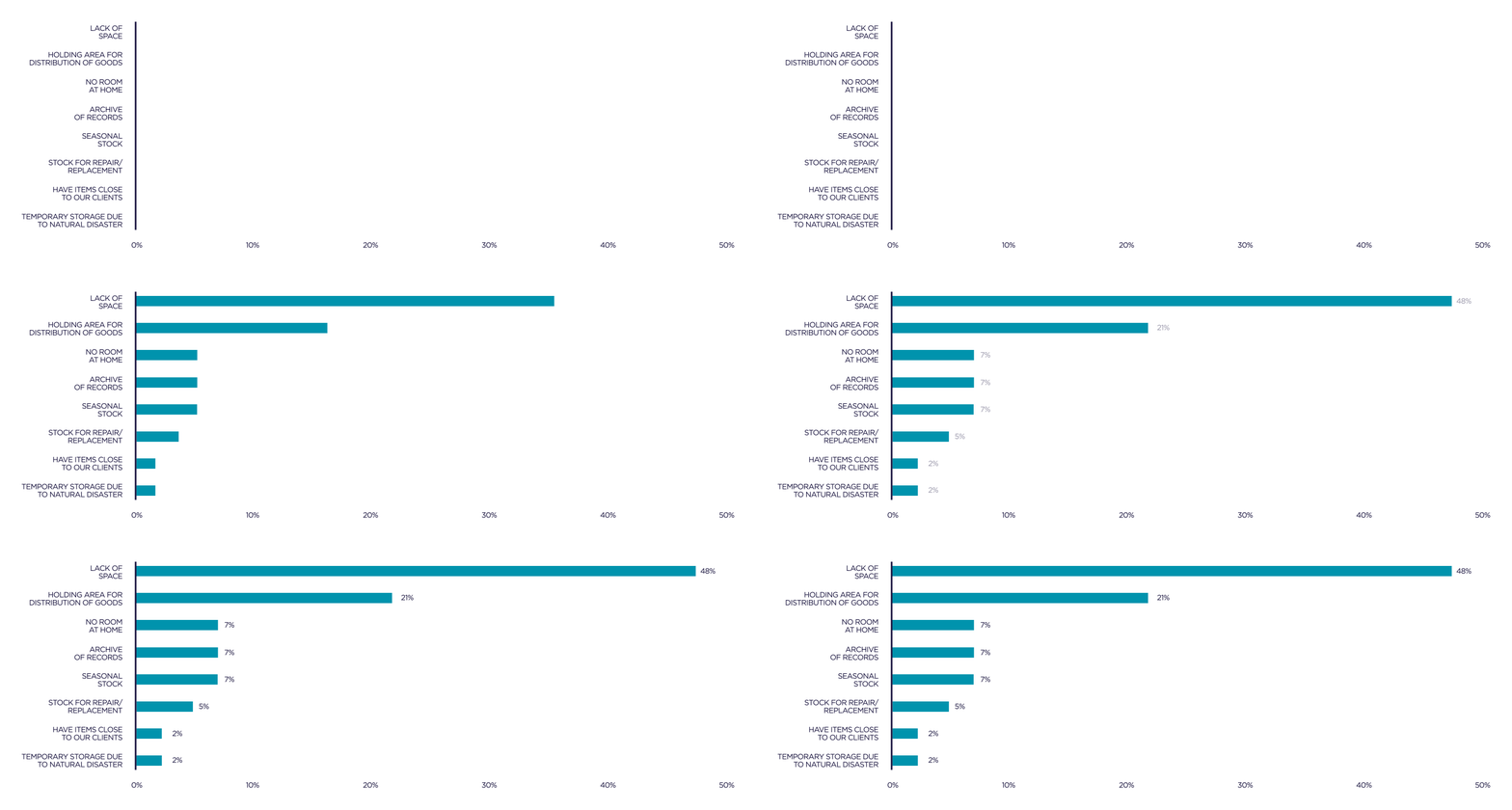
Storage demand is driven by a combination of life transitions and practical space needs. No room for items at residence (26.6%) is the most commonly cited reason for considering self storage, followed by moving (21.7% and 5.6%) and an important life event (14.0%).
This reinforces the industry’s structural resilience: events such as bereavement, relationship breakdown, and family changes are largely non-discretionary and create urgent storage needs that are typically price-insensitive.

The domestic/business split of 75.9/24.1 (by customer count) means
that domestic demand drivers have an outsized influence on industry performance. The concentration of domestic reasons around housing-related events - moving, renovating, downsizing -  means that housing market activity remains a critical leading indicator for storage demand.

back to the churn

Length of Stay & Unit Rental Patterns

39.0%

of customers have stayed

3+ years — the backbone

of predictable, long-term

revenue

Length of time the Storage Unit was rented for

TOTAL SPACE

67.5M

SQ FT

NATIONWIDE
STORES

3,143

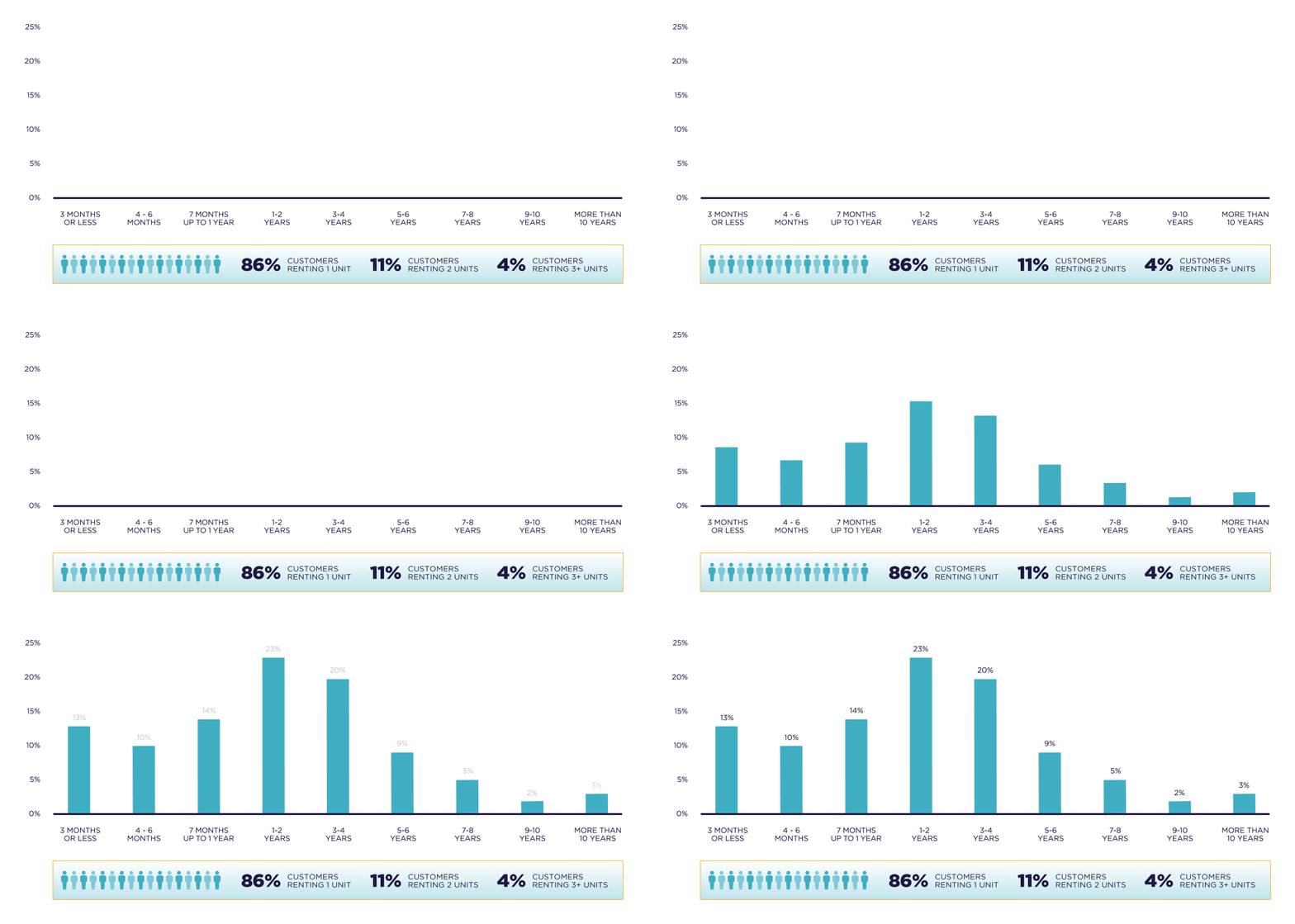
The length-of-stay data from the 2026 customer survey reveals a distribution that is fundamental to understanding self storage economics. The largest cohort (23.2%) has been in their current unit for 1–2 years, followed by 3–4 years (20.2%), 7 months to

1 year (13.6%), and 3 months or less (13.2%).

A significant long tail persists: 9.2% have stayed 5–6 years,

5.3% for 7–8 years, and 1.8% for 9–10 years. Combining all stays of 3 years or more, approximately 39.0% of customers are in multi-year tenancies, representing the backbone of predictable, long-term revenue.

Unit rental patterns confirm that the vast majority (85.9%)

rent a single unit, with 10.6% renting two units and 3.5% renting three or more. Business customers are likely to account for

the majority of multi-unit rentals.

The combination of lengthening stays and the structural

shift toward an older customer base suggests the industry’s customer lifetime value is increasing. Operators should focus retention strategies on the critical 6–12 month window,

when the transition from short-term to medium-term occupancy occurs.

Contributors

Stabilisation After the Post-Pandemic Correction

GET IN TOUCH

CUSHMAN & WAKEFIELD
CONTACTS

Steffan
Morgan

Partner,

Self Storage

+44 (0)7773 458 142

William

Inglis

Associate,

Self Storage

+44 (0)2071 525 188

Daryl
Perry

Head of Research & Insight

+44 (0)7341 109 340

Matthew
Denton

Analyst

+44 (0)1217 105 671

SELF STORAGE ASSOCIATION
UK CONTACTS

SIMON

FORRESTER

Chief Executive 

+44 (0)1270 623 150

Helen
Bourke

Operations Director

+44 (0)7511 160 205

Emma
Greenwood

Membership Services Officer

+44 (0)7562 182 537

Stephen
Ramage

Membership Services Officer

+44 (0)7547 672 541

Bryony
Pearson

Administration Manager

+44 (0)1270 623 150

Galina

Garneata

Comms and Administration

Coordinator

+44 (0)1270 623 150

Request Advisory Services

HOME

THE MARKET IN CONTEXT

DEMAND AND SUPPLY

COSTS, PRICING, PERFORMANCE

THE Customer

GET IN TOUCH

About Cushman & Wakefield

Cushman & Wakefield (NYSE: CWK) is a leading global commercial real estate services firm for occupiers and investors with approximately 53,000 employees
in over 350 offices and nearly 60 countries. In 2025, the firm reported revenue of $10.3 billion across its core service lines of Services, Leasing, Capital markets, and Valuation and other. Built around the belief that Better never settles, the firm receives numerous industry and business accolades for its award-winning culture.

For additional information, visit www.cushmanwakefield.com.

ABOUT THE SELF STORAGE ASSOCIATION UK

The Self Storage Association UK (SSA UK) was established in 1995 as the principal trade association representing both self storage operators and industry supplier members’ interests in the UK. The association seeks to promote best practice and facilitate the growth of one of the fastest growing alternative asset-based industries
in the UK. Our vision is to ensure a sustainable and self-regulated self storage industry.

For additional information, visit www.ssauk.com.